Gosselin Family Drama, Retatrutide Study & Alexander Brothers Case

“Everybody saw what the network wanted them to see... but in reality, it was child labor.”
- Chalene Johnson
episode
Description

Collin Gosselin’s memoir is reopening the Jon & Kate Plus 8 story, and the family’s conflicting accounts raise questions reality TV never answered. Chalene Johnson explores Collin’s allegations, Kate Gosselin’s responses, and what happens when children grow up as content.

Retatrutide is making headlines after Eli Lilly’s 80 week trial against Ozempic (semaglutide). Chalene examines the peptide hype and what women over 40 should consider about muscle preservation.

Then, The Wolves of Real Estate takes Chalene inside the Alexander brothers case, where luxury trips, powerful connections, and survivor accounts reveal a disturbing pattern. Tal, Oren, and Alon Alexander’s pursuit of reality TV fame left behind footage that makes this story even more unsettling.

Topics discussed: Family estrangement, gender backlash, injectable peptides, bone density, sex trafficking.

with
episode
Questions

How should parents respond when adult children describe painful memories?


Have you watched Wolves of Real Estate? What’s your thoughts on this case?


What is your best tip for making a move easier?


episode
Timestamps
00:00:00

Gosselin family drama, retatrutide and Alexander brothers

[00:00:00] Chalene Johnson : What is up, buttercup? We have so much to cover today. Holy cow. All right, so I have talked about Jon and Kate Plus 8, and the one son, grown son, named Collin. I talked about the fact that his book was coming out. Talked about that this summer. Well, the book is out, and Kate has responded on TikTok to comments.

[00:00:24] Chalene Johnson : We have Collin’s side of the story. We have a couple of his siblings’ side of the story. We have Jon’s side. We have Kate’s side. We have the public opinion side, and all of us feel as though we are entitled to weigh in on this because we watched those kids grow up in front of us. And what does this mean for children whose childhoods become content, content that can be monetized?

[00:00:48] Chalene Johnson : What does that do to these kids? Is it right? Is it trauma? Should there be laws in place? Even if you didn’t watch Jon & Kate Plus 8, like, this is a fascinating story. It’s very complex, and it brings up a lot of topics that we’ve talked about here on the show, so of course, I’ve got opinions. New studies just released on the weight loss injectable that is going to blow Ozempic, Wegovy, and all the others away.

[00:01:15] Chalene Johnson : Like, people are losing their minds over the results from this recent set of trials conducted by Eli Lilly. So we’re gonna talk about retatrutide. We’re gonna talk about peptides a little bit, give you a little update there. And then finally, at the very end, I’m saving it to the end because I’m also gonna give you a trigger warning.

[00:01:36] Chalene Johnson : We’re gonna talk about the Alexander brothers, three really good-looking wealthy guys from the Miami area who were arrested in 2024 on sex trafficking charges. They conducted business in New York and Miami. It’s a fascinating story. They just released a new documentary about it. I watched it. I’m gonna break it down, and I’m gonna tell you what happened.

[00:02:00] Chalene Johnson : I’m gonna tell you about the smoking gun. This story is fascinating, but again, there’s a lot of violence and very upsetting content that we’ll be discussing, I think as responsibly as I always do, but that’ll be at the end, and I’ll give you plenty of trigger warning basically so you can dip out if that is upsetting content for you.


00:02:19

ChatGPT, Claude and AI personal assistants

[00:02:19] Chalene Johnson : I’ve got juicy stories and opinions, a lot to cover today, so let’s get to it. By the way, if you are a ChatGPT Dots user, which is… That’s ChatGPT, it’s like their upper tier. It’s the $100 version of ChatGPT. It has a personal assistant that’s included that is amazing, changed my life. There’s rumors that that’s soon going to be available on the $20 version that you pay for ChatGPT.

[00:02:46] Chalene Johnson : It’s currently on the $20 version of Claude. It’s known as Duet. So if you are a Claude user, go to your Claude and say, “How do I get access to Duet?” ‘Cause right now they’re just rolling it out in beta, and it’ll blow your mind. So get on the wait list. You’ll probably get approved the next day. If you’re like, “I’m not paying for any of that,” well, then try Muse, which is Meta’s AI personal assistant.

[00:03:12] Chalene Johnson : Another free one, I think it’s called Instinct. Instinct allows you to basically run a personal assistant from your text messaging. Anyways, what I was gonna tell you is if you’re a ChatGPT girly who uses the personal assistant on ChatGPT, they just released the latest version where you don’t even have to open up the app.

[00:03:32] Chalene Johnson : You can just text your personal assistant, text her. It’s amazing. It’s crazy. So ask your AI, “Hey, how do I get access to the text version?” By the way, any time you have any question about AI, remember, don’t ask me, don’t ask your neighbor, don’t ask Google. Just go to your AI and say, “Hey- How do I get this?

[00:03:53] Chalene Johnson : Can you explain this to me? What does this mean? How can you help me? How can you justify me paying $20 a month? Help me make that money back tenfold, whatever it is. Anyways, my back hurts because we’re moving. I hate moving. I don’t wanna move, except now I’m kind of excited to move because I’m excited about the new place that we’re moving into.

[00:04:12] Chalene Johnson : But before we found the new place, I’m like, “I don’t wanna move. It’s such a pain in the butt,” and we were supposed to be here for another couple of years. And construction happened, and we definitely have found a better place. I’m really excited about the place we’re moving into. It’s the silver lining how awesome the new space is.

[00:04:28] Chalene Johnson : But I still, I hate moving, and my back hurts because we’ve hired packers, but I’m still such a control freak. I’m like, “I need to organize my underwear drawer before somebody unpacks it. I need to carefully downsize and sort through these things before somebody packs them all up.” So I need to get out of the house.


00:04:46

Jon & Kate Plus 8 and growing up on camera

[00:04:46] Chalene Johnson : Let’s go record the rest of this outside. Shall we? Let’s go. Okay, you guys remember Jon & Kate Plus 8. I talked about this, I don’t know, maybe it was a month ago, on the show. But just in case you’re a new listener, the twins and then sextuplets. This is a story that originally appeared on reality TV. Kate Gosselin was the mom.

[00:05:11] Chalene Johnson : She had that, like, notorious Midwest haircut where it’s, like, spiky in the back and then the bangs combed over in the side to the front. Jon over in the corner, her husband, playing with toys while she’s yelling at him to help her. It made for great reality TV back in the day. I do wanna make a correction because when I talked about this originally, I kept saying the ’90s.

[00:05:37] Chalene Johnson : I don’t know why. It seems like it was so long ago. It was not the ’90s. The show originally aired in 2007, and it was on TV all the way to 2017. I mean, not continuously. Like, eventually Jon and Kate go through a divorce. This is, like, 10 years on TV. You’re watching these kids go through every major milestone on camera, and they’re telling their own stories of what the experience was like.

[00:06:08] Chalene Johnson : And we’re hearing more and more cases of kids who either grew up, like, on reality TV or they’re the kids of these YouTube family creators. These kids are now basically coming forward and describing what it was like from their standpoint as real trauma, trauma that many of us were tuning into every week for entertainment purposes.

[00:06:35] Chalene Johnson : I’m gonna talk to you about this new book that one of the sextuplets just came out with, but I think kind of the An interesting undertone of this story and so many others is that kids don’t have a choice. They don’t have a voice when they’re being used for likes and engagement, basically used to make money by their families.


00:06:59

Collin Gosselin’s treatment placement and family conflict

[00:06:59] Chalene Johnson : And so a quick little background. Collin is one of the sextuplets. When Jon and Kate announced their divorce back in 2009 on the show, Kate got primary custody Of all eight kids. When Collin, when he was around 11 or 12, Kate sent him to a residential treatment facility. At that time, she had said he was having behavioral issues.

[00:07:29] Chalene Johnson : There wasn’t a lot known. People were certainly speculating, but it, it wasn’t something they spent a lot of time publicizing. It was something that little corners of their fandom were talking about and, and wondering what was happening. But as an outsider, as a mom, you hear stories like this. You know, there are kids who are more difficult to deal with, and we didn’t know what this actually meant.

[00:07:52] Chalene Johnson : Well, Jon, her ex-husband, eventually went to court to get Collin out of this treatment facility. When that happened, Collin ended up living with Jon, and I believe it was his wife at the time, for years. And for years, Collin has been basically hinting in social media that his mom is not who we all believed her to be, that his mom was abusive, that he was basically abused for many years, even while they were filming the show.

[00:08:26] Chalene Johnson : Now, Kate has always denied it, and Kate is one of those people that is very polarizing. People either love her or they absolutely can’t stand her. They can point to lots of little clips, lots of moments on the reality TV show or where she’s doing interviews, where people just think she’s a horrible , impatient, sarcastic mother.

[00:08:49] Chalene Johnson : And then there are those who are like, “We’ve taken these things out of context,” and any mother who’s at her wit’s end or who has eight kids or four kids or three kids and not a lot of help is gonna have moments where you say things that aren’t very kind or aren’t very patient, and you’re not smiling, and all the kids aren’t wearing matching outfits, and Mom is patient with them.

[00:09:11] Chalene Johnson : There’s a story that Collin tells in his book where he says he got Christmas presents, and I’m gonna take this out of context, but basically, he was given gifts, and then Kate decides he wasn’t behaving well, and she takes his gifts away and says, “You know, if, if you’re not gonna behave well, we’re gonna take these away.”

[00:09:33] Chalene Johnson : Well, there’s a way that he recalls it. It sounds as though he was the only child who ever experienced her wrath, by his account I don’t know about you, but there are plenty of things, I think depending on how it was described, I don’t think I was an abusive mother, I certainly hope not, but I’m sure my kids, both of them, could write a book and there are ways that they could describe things from their own experience that would sound pretty horrible.

[00:10:02] Chalene Johnson : I don’t know if I can judge some of these stories as being factual because I think you and I both would agree the way your siblings describe what their experiences were are probably very different from yours. If you have kids, if you’ve ever asked them to tell you about, like, different memories they have growing up, they’re probably very, very different from how you would describe them, like your own memories.

[00:10:31] Chalene Johnson : I’m not saying that to say that anything that’s in this book that Colin has written is an exaggeration or that Kate isn’t an evil person who abused her children. I don’t know. But a little bit of background in case you missed the first episode. In the first episode, I talked about some of these things and the fact that Colin was going to be releasing this book, and I said, “You know, it’s gonna be very interesting once this book comes out,” because in his interviews prior to the release of the book, he was very guarded He would say, “You’re gonna hear the whole story, but I- I’m not gonna tell you everything now because it’s, it’s gonna be in my book.”


00:11:07

Collin’s memoir and Good Morning America interview

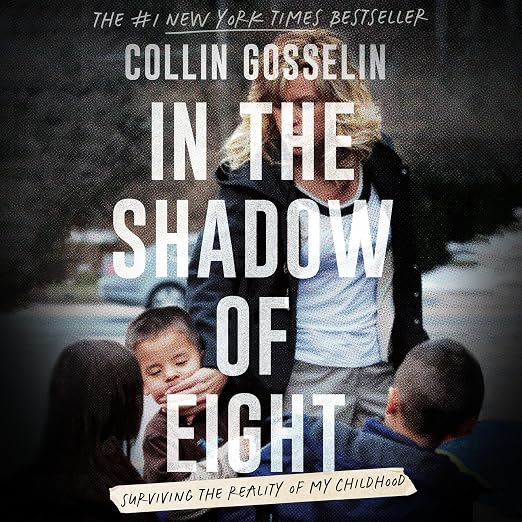
[00:11:07] Chalene Johnson : Well, the book is out. The book is called The Shadow of Eight: Surviving the Reality of My Childhood. It came out on October 13th, and the day before it came out, Colin sat down with Juju Chang, Good Morning America, and he simply said, “Listen, my whole life, everything that you saw on TV was a lie. Everything that you saw, it wasn’t reality.”

[00:11:30] Chalene Johnson : Here’s part of the interview. I’m gonna let you listen to it.

[00:11:33] Clip: I was safe on the days that other adults were there. My mom wouldn’t act up or slip up. What do you mean by act up? Well, let’s just say on the days that there weren’t other adults there, she would get away with doing a lot more, with being a lot more physical, with saying things that she wouldn’t say in front of other adults.

[00:11:49] Clip: For weeks and weeks and years and years, I was kept in essentially what was a jail cell. It was a room, not even in the finished part of our basement. It was in the unfinished part, all the way pushed in the back behind storage shelves of cans of food and paper towels. I was put back there like an item, like an animal, in a room that my mom had specifically built for me, and it had two cameras, one facing above the door facing the mattress I slept on and another one facing the door from the side, and a tiny little window in the corner.

[00:12:17] Clip: And that’s where I spent my days. I had a few books and a mattress, and that was it. And you had to ask permission to go to the bathroom? Yep. The cameras had audio, and it was like a humiliation ritual. I had to stand in front of the camera and ask my mother to come up and use the bathroom, to come down and unlock the door so I could come up and use the bathroom.

[00:12:34] Clip: I mean, as a child, that is so absolutely humiliating. That takes the humanity from you. Did your mom zip-tie you? Yeah, so there was a day where there were nannies in our home, and I was like, “This is my chance.” Like, I have to leave this house. Got out of the house, and I realized, well, very quickly that if I turned up at anybody’s doorstep, they’d take me right back to my home.

[00:12:55] Clip: So I turned back and went back to our house, and my mom had been away. Well, she came home, and she wasn’t very happy with me and came into the room and slammed me around and confined me ankles and wrists. After I was bound, picked me up and threw me on the floor. She had yanked on my ear so hard that it was purple.

[00:13:13] Clip: It was purple and swollen, purple going down the side of my face Coming off of my ear from her pulling on my ear and dragging me across the room, and I went to school with this, and my teacher was like, “Collin, what’s wrong? Like, what happened to your ear? What’s going on here?” I went to the guidance counselor and spoke to them.

[00:13:29] Clip: My mom came and picked me up from school. That was that. She was not happy about it. She was not happy to have this attention put on her. Do you think that they let her off because she was famous? Absolutely. So that woman we saw on TV was not the woman that you grew up with? It was all show business for my mom.

[00:13:45] Clip: It went quickly from her being a mom to her being a mom to the rest of the world and disregarding the needs of her children. She prioritized what it looked like and not what it was. For my entire childhood, everybody saw what the network wanted them to see. They thought it was this amazing, polished story and that me and my siblings had this great childhood, and that it was all sunshine and rainbows, but in reality, it was child labor, and it was memories and things we should have gotten to experience cut short and taken from us.

[00:14:19] Clip: It was scripts and itineraries.

[00:14:21] Chalene Johnson : Okay, so his allegations, and I want to be careful here because they are allegations, but he says after the divorce, his mom kept him away from his dad and made him sleep, made him only sleep in a locked room in the basement. That’s pretty horrible. He also says that teachers noticed signs of abuse.

[00:14:44] Chalene Johnson : One thing in particular they saw, he had a swollen ear, and he talked to a guidance counselor about the fact that his mom had done that to him and that he then got in a lot of trouble for speaking out. He says that he tried to run away from home. He tried to basically escape, and that Kate zip-tied his hands and his feet.

[00:15:07] Chalene Johnson : That’s pretty horrific. He says that days before his 12th birthday, he was placed into an institution and that he was medicated, and he lost basically all contact with his family. And in my mind, this is where things get a little complicated because Collin Gosselin is not the first reality TV kid, not the first celebrity kid, not the first kid in general who has come out and talked about being put into one of these institutions where families were sold this idea that in order to protect your kid, in order to make sure they don’t get on drugs, in order to protect your child from themselves and to protect your family, they need to go into this special institution where we teach them discipline, and we help them with their behavioral challenges, and we give them structure.


00:15:59

Paris Hilton and residential treatment concerns

[00:15:59] Chalene Johnson : And we’re talking people with money were targeted by these facilities where we’re now learning These facilities were far more abusive than the homes that these kids were in, and that many times these kids didn’t belong in these homes, and they were essentially abused within these homes. By the way, Colin hasn’t said any of those things per se about his experience, but what he has done is described what many other kids, including Paris Hilton and others, have come forward and said that they were isolated from their families, that they were often medicated, and the families were intentionally kept away from these kids because obviously the parents were like, “We’re trusting the advice of these experts.”

[00:16:48] Chalene Johnson : You know, we’re paying, like, tens of thousands of dollars per month to have their kid get on the right path and to have therapy, and we’ve got these experts who are saying, “Okay, it’s not in your child’s best interest for you to come and visit them. They need to experience the pain of being separated from their family so it almost, like, scares them straight.”

[00:17:06] Chalene Johnson : Okay, I’m saying all that because it sounds to me like that’s what happened. I don’t know. I’m just saying, like, could that be one of the things that did happen? Because Colin is saying, “No one came to see me.” And when I talked about this before, that was my question. Was the family told, “Hey, it’s not in your best interest to visit him.

[00:17:25] Chalene Johnson : It’s not in his best interest”? Or was it as Colin remembers it? Kate didn’t care. It was like one less child to worry about Is that Colin’s reality? Is that Kate’s reality? You know, when you’re a parent and you’re going through something where you feel like you have no control over your child, it’s pretty scary, and you’re willing to do just about anything, and you’re looking for experts who will help you.

[00:17:54] Chalene Johnson : And is that what was happening? Or, in fact, was this a mom who, and this happens sometimes, feels very differently about one child? One child becomes the black sheep. Colin’s book really makes it very clear that is his experience, that he was the one that was targeted, the one who Kate put all of her frustrations and anger on, the one who Kate mistreated.

[00:18:21] Chalene Johnson : And there’s lots of sources in the book who recall seeing things, instances where it was very clear that Colin was her target. So he’s in this institution, he’s medicated, he has no contact with his family, and apparently he somehow gets a letter written in crayon to his father, John. And basically the letter says, “Daddy, I love you.

[00:18:45] Chalene Johnson : You have to save me.” It’s a long story, and I think this is a really good book. I think it’s number one last I checked. And I do recommend if you’re interested in this at all, I think it is worth reading to hear what went into John having to fight in the court system just to have access to Colin. And it does seem, from the evidence that’s been presented, that Kate really made it impossible for John to know what was going on, and she does come across as a quite controlling individual.


00:19:17

Collin’s mental health claims and Kate’s response

[00:19:17] Chalene Johnson : So none of that is really surprising to me. But there’s being controlling, and then there’s being abusive. And the book basically says that in 2023, he got his own psychological evaluation because he claims, “Didn’t, and I don’t, have any mental health issues. This is something that my mom used to basically get me out of the house, to put me in this institution, and to just write me off.”

[00:19:45] Chalene Johnson : So in 2023, he got an independent psychological evaluation. He’s published it and says there is no mental health diagnosis. ABC reached out to that doctor. Now, that doctor has declined to comment, so we can’t verify it. But I think that matters because Kate has pointed to her son’s mental health, and she still is.

[00:20:07] Chalene Johnson : Like right now, it feels like she’s trying to kind of take the high road. I don’t know. I kind of feel like that’s the right thing to do, honestly, because I’ve seen so many instances in social media where a kid comes after their parent and says, “Here’s what happened.” It’s usually mom. “I’m putting my mom on blast.”

[00:20:28] Chalene Johnson : And then Mom comes forward and defends herself And then the internet divides. When the internet divides, that means you’re taking people and you think you’re just defending yourself, but really what you’re doing is creating an army of people to come after your child. I have to say, if it were me, I think The best thing to do is to do whatever’s in the best interest of your kid.

[00:20:54] Chalene Johnson : I don’t know, uh, ’cause I’m not in that situation, but right now that’s my belief. What would you do if suddenly just… I mean, I know you love your kid, but if suddenly your kid was saying things about you that you knew weren’t true, that were horrific, hurtful, and so far away from your own personal reality, would you defend yourself or would you just do everything you could to heal the relationship between yourself and your kid?

[00:21:21] Chalene Johnson : So wherever you’re listening, will you let me know, would you take the high road or would you defend yourself? Well, Kate is- she’s really taking the high road. She is not responding. She’s just saying things. If you have a child with a mental health issue, then you can relate, and if you don’t, well, then you can’t.

[00:21:39] Chalene Johnson : She has not done a formal post on TikTok addressing it, but there have been lots of people who say that they’ve received private DMs from her where she’s kind of addressed some things individually. But then on October 25th, she did discuss the parts about not visiting him when he was in the facility, and this just happened.

[00:22:02] Chalene Johnson : Again, Colin said that she visited him one time the entire time that he was in there during treatment, and Kate has recently come out and said, “No, every single time that we were allowed to, we did.” In fact, there were, I think she said, at least one or two times that the whole family had planned to visit him, but the facility canceled it because they felt that Colin was too unstable.

[00:22:29] Clip: Okay.

[00:22:29] Chalene Johnson : Well, now we have her answer, and as I said in the previous episode where I addressed this, if you are going to say anything on the matter, in my opinion, it’s also an opportunity to acknowledge that your child is in pain. Whether you– whether she sees his reality as her own, whether she thinks what he’s saying is exaggerated or whatever it is, it is your child and it is an opportunity to extend an olive branch and to say, “It kills me to know my son was in pain, and how sad he was and how much trauma he experienced, and that these are his memories.”


00:23:17

Hannah and Mady Gosselin’s differing accounts

[00:23:17] Chalene Johnson : Like, I’m not suggesting that would heal their relationship, but it would certainly speak to her intentions and that she cares for her son in this way. And I will also add that his siblings, the other seven kids, until recently, they’ve all kind of said, “You know, our mom is great. She did the best that she could.

[00:23:39] Chalene Johnson : She’s not, certainly not perfect, but yeah. No, these things didn’t happen. This just did not happen. We were afraid of Colin Until recently. But there is one sibling, and that’s Hannah, one of the sextuplets, who has supported Colin for the last several years. And in fact, she moved out of Kate’s house and m- moved in with John and, I can’t remember if it’s John’s new wife or girlfriend, whatever.

[00:24:06] Chalene Johnson : It is Hannah who’s really been standing by Colin’s side. Then on October 21st, so again, just last week, she basically posts on TikTok that she needed to take a step back, that she hasn’t lived with her dad in over a year, she hasn’t talked to Colin in over a year, and she just doesn’t want to comment on his behavior growing up.

[00:24:24] Chalene Johnson : She just doesn’t want to be involved. Colin himself has said, “No, we are in contact. I still talk to Hannah.” Mady, one of the twins, has come out and said, “Well- We haven’t talked to Collin because Collin threatened to hurt our family. He physically threatened our family, is her quote. What does that mean? I don’t know.

[00:24:46] Chalene Johnson : But it’s very clear that this family, the brothers, the sisters, the siblings, the twins, the sextuplets, the parents, no one is on the same page. Everyone has very different account and experiences and interpretations of what happened to them. I think we can all agree it’s traumatic, and I think being on TV, growing up on TV, even just, like, being in the public eye, how can a kid actually have a normal life?

[00:25:14] Chalene Johnson : What is a normal life? I don’t know. But it’s pretty interesting, and these kinds of family dynamics are happening more and more. Like, I, I mentioned a few reality TV shows where we’re looking at families who are kind of dependent upon one of the kids being the social media star, and then everybody’s building this, like, these businesses around that hero sibling or that hero child.

[00:25:44] Chalene Johnson : And in most of those instances, whether you’re talking about the Nader sisters or the D’Amelio sisters or Alix Earle and her recent reality TV series, they’re interesting. They’re fascinating because we see little pieces of our own family dynamics. I mean, if you have siblings, and I interviewed you and each one of your siblings, I’m sure I would get a different interpretation of each of your childhood experiences, and I think that’s why this is pretty fascinating.


00:26:13

Netflix’s Gosselin documentary and gender backlash

[00:26:13] Chalene Johnson : And Netflix must agree because same day that Hannah posted that she was gonna take a step back, Netflix announced that they’re filming a documentary about all of this. No title has been released yet, no release date. I don’t know if Hannah saying that she’s stepping back means that she’s gonna be involved in the Netflix documentary or not, but it’s, it definitely seems to be as though they’re gonna be filming it from Collin’s perspective.

[00:26:37] Chalene Johnson : And once again, I’m going to say the thing that I don’t think people are talking about, but it’s a pattern. And remember, I told you, I, I’m not gonna talk about these topics just to talk about them. Like, I wanna break them down and get kinda deep. And what I see happening here is that, that gender backlash that I’ve talked about before where we wanna root for women.

[00:26:58] Chalene Johnson : Like, it was so cool to see this Midwest mom who had, like, a normal mom body, who struggled to get pregnant and then ended up having sextuplets and twins and a husband who you feel like you had to make a to-do list for him. We rooted for her. We rooted for this family. We sided with Kate, and we wanted her to succeed.

[00:27:22] Chalene Johnson : But then once she did and she was on top, that thing that often happens with women started to happen, where we’re almost conditioned to expect women to be warm, to be modest, to be humble, to be accommodating, and then when they become more assertive and then they start to become successful, people can interpret those qualities as arrogance, as selfishness, as being a

[00:27:51] Chalene Johnson : And the research just shows that successful women, once they reach a level of success, we no longer like them Even though she has to be as competent and capable as she is to be successful, whatever that might be, whether it’s having her own podcast, her own TV show, or network marketing, whatever it is, once she’s risen to the top, those traits that you kinda need to have in order to be on top get turned against that woman, and then we wanna see her fail.

[00:28:23] Chalene Johnson : I just don’t think that we would be seeing a documentary about John. We wanna see a documentary that proves to us, “See? See? She was a .” I don’t know. There’s something going on there. It’s a social comparison that adds an extra layer. Women’s success adds an extra layer, and I think it triggers insecurities about our own potential.

[00:28:45] Chalene Johnson : It can become a mirror, and so when a woman is in a position, whether it’s fame or money, or she’s risen to the top of said industry and she’s making more money than anyone else or she has more notoriety, she immediately becomes a target, especially with other women. And I’m not suggesting that all women think this way, have this bias, but it’s there.

[00:29:10] Chalene Johnson : Is it misogyny? Is it what we’ve been conditioned to do? Can we break that cycle? I sure hope so. Anywho, back to Jon and Kate Plus Eight, plus Collin. We don’t know what happened in that household. I think that his book is an interesting read. I would recommend it. What I do think we can all agree upon is that it’s not good for kids.


00:29:31

Gen Z, boundaries and going no contact

[00:29:31] Chalene Johnson : Let kids be kids. Don’t make them a part of a paycheck. And we’re gonna see more and more of this. I also think this generation of Gen Z, they have language and awareness that we Gen Xers, older millennials, we had no clue. Like, you know, nobody was going to therapy. Maybe our generation just started going to therapy, so we started teaching our kids about boundaries and emotions and triggers and what it means to be healthy and to set up beliefs and standards for yourself.

[00:30:05] Chalene Johnson : And we’ve given these Gen Zs this language, and so now we shouldn’t be surprised when they’re like, “Yeah, you know what? I think I’m gonna go no contact. No, you know what? Yeah, you gave birth to me, but you’re not entitled to treat me this way, and I, I don’t actually have to pretend that our childhood or my childhood was idyllic.


00:30:23

Sponsor: Midi Health and menopause care

[00:30:23] Chalene Johnson : I can actually… I can speak my truth.” A lot of layers here. A lot of layers Hey, I wanted to take just a moment, and I think it’s almost like a public service announcement. We talk a lot about how crazy the landscape is right now with peptides. And because a lot of people are buying them from shady places online, I think telehealth companies, some of them all get lumped into that same category.

[00:30:46] Chalene Johnson : But please know this, there’s a huge difference in the types of telehealth companies that exist out there. One of the things that makes Midi stand apart from other providers is, number one, that all of their care is provided by menopause-trained clinicians. Like, they follow evidence-based guidelines.

[00:31:07] Chalene Johnson : They don’t take shortcuts. They actually practice medicine. While, unfortunately, a lot of these telehealth companies, they’re now selling hormones, they’re selling GLP-1s. Some of these telehealth companies are prescribing things that are not approved for human consumption or human use by the FDA. Now, listen, that’s called the gray market, and Midi will steer clear of that.

[00:31:36] Chalene Johnson : Why? Because they want to make sure that you and your health is number one. The difference is they don’t just sell products and prescribe. They actually monitor, they evaluate, they adjust levels. They personalize your treatment based on, like, your symptoms. Like, what’s going on with you, your health history, your goals, all of those things.

[00:31:55] Chalene Johnson : Yes, they can help you with GLPs and semaglutides and helping you to evaluate which ones might be right for you. But if you’re looking for something that’s black market, you’re not going to get it from Midi Health. But what you are going to get is exceptional care from clinicians who are specifically trained in menopause, evidence-based guidelines, and they’re going to offer ongoing assessments because l- I mean, hormones are not a set it and forget it.

[00:32:21] Chalene Johnson : As you age, as you go through different changes, your hormones fluctuate. And so it’s really important to have a clinician that you trust and one, in my opinion, who actually wants to work with you to optimize the way that you age. So whether it’s a conversation you want to have about peptides or a prescription you’d like for a safe-for-human-use peptide, or maybe it’s getting estrogen cream for your face or having somebody order you a DEXA scan to look at your bone density, or maybe prescribing something a little bit stronger for hair growth, a clinician at Midi Health can help you with that.

[00:32:56] Chalene Johnson : Book your consultation today. You can do so by going to chalene.com/midi, M-I-D-I. Again, it’s chalene.com/midi. They accept almost all major insurance plans, and they have clinicians in all 50 states. chalene.com/midi. All right, back to the show. All right. One of the topics that’s still really popular from you, like the questions I get every single day about peptides.


00:33:24

Collagen, skincare and injectable peptides

[00:33:24] Chalene Johnson : So just a refresher in case you’re new to The Chalene Show or new to the conversation around peptides. Peptides are injectables in most cases. There are different types of peptides. You could take a collagen peptide that’s a powder form. You could put a peptide in your skincare and apply it topically.

[00:33:42] Chalene Johnson : You can also inject peptides. So peptides are … It’s a very broad term. Keep that in mind, you guys. So anytime I bring up peptides, people think I’m always talking about Ozempic. If someone says, “Are you doing peptides?” Yeah, I had collagen peptides in my coffee this morning thanks to Organifi. Yeah, I had skincare peptides in, that I put in my lotion every day that helps me with crepey skin.

[00:34:05] Chalene Johnson : So there’s lots of different forms of peptides. Injectable peptides are all the rage, and what falls into those categories are injectable peptides for just about any function of your body. So they’re kind of like a hormone in that most of these peptides, your body should produce them naturally, but some people have less, some people have more, some people are deficient.

[00:34:29] Chalene Johnson : And so people are using them to biohack. There’s a peptide that makes your skin look more tan. There’s a peptide that helps your skin and hair produce more collagen. There are peptides that help to reduce body fat, peptides to help improve muscle development, and I am currently researching peptides that improve bone density.


00:34:50

Camp Be More tickets and peptide discussions

[00:34:50] Chalene Johnson : That would be fascinating. It is one of the topics that we are going to be covering at Camp Bmore. By the way, I just heard from my team that the entry-level ticket for Camp Bmore is almost sold out. Like, we have, like, literally, last I checked, five seats left of our, you know, most affordable ticket, which is the babe ticket.

[00:35:13] Chalene Johnson : So if you haven’t yet got your tickets for Camp Bmore, girl, what are you waiting for? Are you that kind of woman? Are you the kind of woman who’s ready to shake the stereotypes, meet new friends, connect on a deeper level? No , no judgment. Everyone shows up as strangers. Don’t think there’s gonna be a bunch of cliques or, like, everyone shows up with their girlfriend.

[00:35:37] Chalene Johnson : No. People like to go to this event, surprisingly, by themselves, ’cause they’re like, “I don’t want to be responsible for somebody else having a good time. I actually want to make new friends. I want to have deep conversations. I want to talk about this . I want to have a good time. And I want to let loose, and I want to wear whatever I want to wear, and I want to just be surrounded by these kind of women who are like, ‘I’m ready.

[00:35:59] Chalene Johnson : I just need the right kind of women around me so that I feel empowered, and I need a plan, and I want to have a good time.'” I don’t know if that’s you If what I just said scares the crap out of you, but you know you need it, well, then this is your sign. Go to Camp Be More and get your ticket before they’re sold out.

[00:36:18] Chalene Johnson : And I’m not just saying this. We’re sold out of the Royal ticket. We’re almost sold out of the Queen ticket, if not already, and we have just a few tickets left of the entry-level Babe ticket. So don’t kick yourself. It’s in April. I promise you’re gonna have the best time of your life and probably make a new best friend.

[00:36:36] Chalene Johnson : Camp Be More. Why was I talking about this? Oh, yeah, because we’re gonna talk about … It’s one of the topics you guys have said, “Can we go deep there? Like, break it down for us.” So we’re going to be covering that in a very unique way this year at Camp Be More. But one of the stories that is all over the news right now, and I wanna make sure you are in the know, is regarding the peptide known as retatrutide Eli Lilly’s new weight loss medication.


00:37:03

Retatrutide vs. Ozempic study results

[00:37:03] Chalene Johnson : Listen to this story they just released. Eli Lilly says it has a drug that has shown to provide more than double the weight loss of Ozempic’s highest dose. How does it work, and what makes it so different from all the other weight loss drugs out there?

[00:37:17] Clip: Well, Keira, the field of diabetes and weight loss medications continues to grow, and for the first time, researchers in a phase III clinical trial are comparing a new investigational drug called retatrutide with Ozempic.

[00:37:28] Clip: In the study, they’re following nearly 1,300 adults, Keira, with a history of type 2 diabetes, and they found that those taking the highest dose of this investigational drug, retatrutide, lost an average of about 47 pounds, or 21% of their body weight, compared to those taking the highest approved doses of, of Ozempic lost an average of 21 pounds, or 9% of their body weight.

[00:37:48] Clip: Now, Keira, as for what makes them different, Ozempic targets one pathway, the GLP pathway. That’s probably the most commonly known. Whereas retatrutide targets three different pathways, GLP, as well as glucagon, and an additional pathway, and it’s thought that together they affect appetite, blood sugar control, as well as how our body, or, or how the body manages energy.

[00:38:07] Clip: Now, researchers also found greater improvements in cardiovascular risk factors, as well as indicators for blood sugar control, like A1C. An important distinction here, however, and this is really important to understand with this study, the researchers compared this drug to Ozempic. They did not compare it to Wegovy, which has the same active ingredient as Ozempic, but a higher dose.

[00:38:26] Chalene Johnson : Got it. So if someone is considering taking a weight loss drug, you know, with so many options out there now, what should they consider?

[00:38:33] Clip: Number one, thinking about the side effects. In this study, it was found that the most common side effects were gastrointestinal symptoms, nausea, vomiting, diarrhea, constipation.

[00:38:41] Clip: But it was found also that patients who took the retatrutide, they stopped taking it at a higher rate because of symptoms. About 8% of those taking retatrutide stopped due to severe symptoms or symptoms that were difficult to manage, as opposed to about 3% of those taking the Ozempic. Now, important to also note that when you’re talking about these medications with a provider, you wanna make sure to understand your background, your risk of cardiovascular disease and diabetes.

[00:39:04] Clip: Of course, you wanna make sure whatever one you can sustain the most and also afford based on your insurance coverage and cost. And remember, these medications are meant to be used with sustainable nutrition changes and physical activity.

[00:39:16] Chalene Johnson : Okay, so let me break down what they just covered there. I wanna kinda put it into perspective.

[00:39:22] Chalene Johnson : This was a study that lasted over 80 weeks, so over a year, year and a half. It included nearly 1,300 people in the study. This is important. They all had Type 2 diabetes. Okay? This wasn’t a study specifically w- looking at women in menopause or a woman who’s already pretty fit but wants to drop the last 15 pounds.

[00:39:43] Chalene Johnson : No, this is specifically looking at people with Type 2 diabetes. And so you really cannot… The study and the numbers that I just, that you just heard in that news clip right there, I think the problem is people are hearing that and they’re like, “Oh, wow, that would work for me. I want those kind of crazy results.”

[00:40:01] Chalene Johnson : But that doesn’t mean that you’re going to get those kind of results or that you’re personally gonna lose that type of weight. They compared it with the highest approved dose of Ozempic, which is two milligrams. They didn’t compare it with Wegovy, which has the same active ingredient, is semaglutide, but it’s dosed differently for weight management.

[00:40:23] Chalene Johnson : So remember, Wegovy is really for weight management. Ozempic is… Well, God, there’s all these different weight loss medications now, and some of them are a GLP-1, a GLP-2, and a GLP-3. And until these recent studies, it’s really been Zepbound and tirzepatide, the GLPs that people have said are giving people the very best results.

[00:40:46] Chalene Johnson : Of course, everyone’s different. Until this study came out, there’s no even comparison to how effective this retatrutide has been. So quick refresher, because these names all start to sound the same. Ozempic targets GLP-1. Tirzepatide, which is Mounjaro, and Zepbound target GLP-1 and GIP, okay? Retatrutide is the first that adds a third receptor, which is glucagon, and the reason why that’s interesting, and interesting to me, is because it gives people energy.

[00:41:22] Chalene Johnson : Many in the study reported that while they had significant weight loss, they were actually able to still eat. Now, listen, you’re not losing weight, just to clarify, I mean, pop quiz. You’re not gonna lose weight unless your body is in maintenance, surplus, or deficit. Correct answer, deficit. You have to be eating fewer calories than you’re burning in order to lose weight, okay?


00:41:50

Weight loss, energy and preserving muscle

[00:41:50] Chalene Johnson : So that means for sure it affects appetite. However, some of these GLPs, I don’t know if it’s a GLP or if people are taking too high of a dose or if they’re not being monitored appropriately, but I’ve seen so many people, specifically women, who’ve lost their appetite, and then they’re really excited. “I’ve lost my appetite.

[00:42:13] Chalene Johnson : I’m, I’m losing weight. I don’t have to diet. I just, I’m not thinking about eating.” But they’re also very low on energy Now think about this, ’cause I’ve talked to plenty of women who this has happened to. The weight starts coming off for the first time. They had been torturing themselves in the gym. Now they’re not going to the gym because their energy is low, and they’re getting on the scale, and the scale is going down.

[00:42:35] Chalene Johnson : And so the brain starts to associate, like, “Wait, why would I go to the gym? When I was going to the gym, I wasn’t losing weight. Now I’m not going to the gym and I’m losing weight.” It’s weird. It’s a mind . And I’ve seen women who have fallen out of a lifelong habit of lifting weights and exercising, and they just aren’t hitting it as hard because they’re just focused on the number on the scale, and that’s not the number that impacts your long-term overall longevity.

[00:43:05] Chalene Johnson : If you wanna age powerfully, ladies, you have to be looking at muscle composition. Of course, you’re gonna be healthier if you’re closer to a healthy weight, but that weight needs to be comprised of muscle. And y- yes, I want you to reduce your body fat, I mean, if that’s the goal, but remember, if your body fat is dropping and your muscle tone is also dropping, it’s not a positive thing.

[00:43:29] Chalene Johnson : We’ve gotta make sure that people are eating enough calories to be able to still maintain muscle and, frankly, to have the energy to go exercise. So we haven’t seen any studies specifically looking at that, but I just wanna say I am encouraged to hear that there might be a GLP, such as retatrutide when Eli Lilly releases this, that allows people to consume enough calories to be able to maintain their muscle and, most importantly, to have enough energy to be able to still go to the gym and lift your weights.

[00:44:00] Chalene Johnson : ‘Cause ladies- I want you focused on how much muscle does your body have. If I hear one more person say, “I’m about to hit my goal weight,” I’m like, “Who cares?” That’s such a small fraction. It doesn’t tell you whether you’re healthy or not. Your weight doesn’t tell you if you’re healthy. Is it one measure? Of course.

[00:44:20] Chalene Johnson : But the most important measure for us is muscle mass. So are you adding muscle? Are you reducing body fat? But more importantly, are you maintaining muscle and are you improving bone density? ‘Cause you’re way too smart, you’re way too cute to take shortcuts that might shorten your life. We’re not gonna do that.


00:44:40

Retatrutide access and online peptide sellers

[00:44:40] Chalene Johnson : Just keep this in mind. Everyone’s gonna be losing their mind over retatrutide. People already are. But anyone who says that they’re on it, anyone who’s trying to sell it to you, unless they are receiving it through a legitimate clinical trial being conducted by Eli Lilly, saying that you’re taking retatrutide means you’re taking something that’s been sold to you as retatrutide.

[00:45:06] Chalene Johnson : It does not mean that you’re taking retatrutide. You know, like I said, there’s been lots of these pop-up places online that tell you that they’re, “Oh, for… No, this is a legitimate pharmacy. It’s for sure it’s retatrutide.” But then when they go and test the vials, it’s actually some other form of a GLP-1.

[00:45:25] Chalene Johnson : You know, ’cause, like, how are you gonna know? You know, you’re on tirzepatide, you’re on Wegovy. You don’t know what’s in that vial unless you’re getting it tested, and most people aren’t. So could it be retatrutide? Possibly, but it’s not being sold legally. The product sold outside of those trials probably contains something other than retatrutide.

[00:45:45] Chalene Johnson : So just word of caution, always be careful with your sources. Not all telehealth companies care about quality and efficacy and following FDA guidelines. A lot of them are just, you know, they’re fly-by-night sham companies set up late at night out of someone’s garage because they see an opportunity.

[00:46:05] Chalene Johnson : Because, I mean, let’s face it, there’s nothing easier to sell than weight loss in an injection. It’s like shooting fish in a barrel. People are making so much money selling this stuff, and a lot of it’s unregulated, and I’m just shocked that we don’t hear about more nightmare cases or deaths or, I don’t know, just, like, accidents happening with these peptides.

[00:46:31] Chalene Johnson : I mean, I would have bet my life savings two years ago when all these things started popping up that it, it was just gonna be an avalanche of medical problems, but we really haven’t heard many yet. So I don’t know. I’m still hesitant, and I’m still telling you to be very, very cautious. Where you purchase these things and who’s overseeing your medical care matters.


00:46:55

Alexander brothers case and content warning

[00:46:55] Chalene Johnson : Okay, we’re back inside the house, and this last one starts with a trigger warning I’m gonna talk about a case that has been in the news it’s the Alexander brothers. And the trigger warning is because we’re gonna talk about some pretty horrific crimes, sexual assaults, and women who were taken advantage of for decades These crimes committed by these three brothers, in my opinion, are some of the worst sex crimes you could possibly imagine.

[00:47:28] Chalene Johnson : I mean, these guys are s- absolute serial rapists, and the fact that we’re not calling them that has a lot to do with the way that they look. They’re good-looking, wealthy white guys that run with the likes of the Epstein crowd. You know, people, specifically men, who they don’t just think they’re above the law, they have been above the law.

[00:47:55] Chalene Johnson : They keep each other’s secrets. Many of these crimes were tied to real estate deals. It’s, like, how they got introduced to some of the wealthiest clients that they served in the Miami and New York area. Frankly, a lot of these douchebags have been absolutely untouchable, and I think that’s the reason why I’m pretty excited about this story because i- it’s got a different ending, it seems to be.

[00:48:19] Chalene Johnson : Okay, so if you don’t know the story, these are three brothers, and this caught my attention because it’s a story that people here in Miami have talked a lot about, and I just watched the documentary which, by the way, I will give you my review of whether I think you should watch the documentary or not.

[00:48:37] Chalene Johnson : Spoiler alert, the documentary is okay. I’m gonna tell you which parts are worth watching. Okay, so you’ve probably seen these guys in the news. Three very wealthy, good-looking brothers, well-connected from the Miami area, also the New York area. The oldest brother’s name is Tal, spelled T-A-L, like almost like pronounced like Toll, but Tal.

[00:48:58] Chalene Johnson : Then there’s two twin brothers, Oren and Alon. And a lot of what I’m gonna share with you are pieces that I’ve put together since watching the documentary. So the documentary starts off kind of, like, showing that these are three young boys who were basically born on third base. Parents have money.

[00:49:18] Chalene Johnson : Parents are… I think they’re Israeli. They’re just wealthy, and they came to America and really made a success of themselves, and their boys were those boys in high school that were very popular, popular with the girls, had lots of money, had lots of parties, and the documentary kind of, like, starts there.

[00:49:37] Chalene Johnson : They go all the way back to high school and basically recounts parties and other encounters that happened with these boys all the way back in high school. So they’re interviewing former classmates, former friends, friends who went to these parties. They’re interviewing teachers. And these boys had a reputation for being, quote-unquote, “playboys,” players even back in high school.

[00:50:01] Chalene Johnson : They had a reputation Of taking advantage of girls who were either unconscious from drinking too much or from being slipped something all the way back in high school. Like, these teachers were aware that these things were going on with these boys, and so they’re interviewing high school classmates who were like, “Yeah, they just kind of all had this reputation.”

[00:50:24] Chalene Johnson : And they interview a girl who basically says her life was destroyed because she had went to a party where two of these brothers, in her words, raped her. And of course, the boys… Now, think about in high school when you would hear stories about a certain girl who would get labeled as being promiscuous, except that we would call her a slut, we would call her a whore, and the rumors would get passed around the school about some girl.

[00:50:54] Chalene Johnson : Well, that’s what happened in this story. The girls would have their reputations destroyed, and the boys would say, “Oh, no, th- she’s a slut. She wanted to have this threesome.” But they had this reputation even back in high school. And then it goes on into college, and the documentary just kind of, like, it kind of jumps all around.

[00:51:15] Chalene Johnson : That’s the one thing I didn’t love about it because sometimes it would jump to a case and- or a woman talking about an experience she had in 2017, then it would go back to a girl who is talking about her senior year in high school, and then it would jump ahead to something that happened in 2020. So it’s kind of like I didn’t love that part of the documentary.

[00:51:35] Chalene Johnson : So I would say if you watch, like, the first half of the first episode and then the final episode, you’ll be good. You can kind of skip the middle one ’cause I’m gonna fill you in. So as you’re watching this, you’re realizing you’re hearing the same story over and over and over again. It goes a little like this.

[00:51:52] Chalene Johnson : These guys are flashing their money, their cash. They’re three very good-looking, tall dudes, two of which are twins. I mean, that alone is going to get attention. Add to that that they’ve got tons of wealth and they can get into any club, any restaurant, they’re driving the nicest cars, wearing the nicest watches, and they’re paying for everything, and they’re meeting beautiful girls at nightclubs, buying their drinks, inviting them to expensive dinners, and then inviting them to go on expensive trips.

[00:52:27] Chalene Johnson : Sometimes it would be to a remote island, sometimes it would be overseas, sometimes it would just be on a yacht, sometimes it would just be to an expensive party. With all the wealthiest clients that they were serving in terms of their real estate Well, these women would all say, like, “I really thought Orrin loved me,” or, “I really thought there was a special connection between myself and Taller.

[00:52:50] Chalene Johnson : I thought we had this chemistry and this vibe, and so I’m going along with him, and I’m joining him at these parties. And then the next thing you know, he’s telling me I have to finish my drink, and the next thing I know, I don’t have control of my body. I’m not unconscious. I’m aware, but I can’t stop what’s about to happen to me.”

[00:53:11] Chalene Johnson : They would recall kind of being semi-conscious and having sex with one of the brothers, and oftentimes it was a brother that they had had sex with consensually previously, but now they’re in this situation where they can’t control their body, and they’re not sure if they just drank too much or what’s going on.

[00:53:32] Chalene Johnson : But now they’re in a twosome or a threesome that they didn’t agree to. And many of these women would say that they were ashamed and in pain and embarrassed and really unsure the next day of like, “What happened, and what did I do wrong?” And so many of them were just absolutely embarrassed and ashamed.

[00:53:54] Chalene Johnson : And of course, they didn’t go to the police. These weren’t women who were sexually assaulted by strangers while they were walking down the street alone and unaccompanied. These were women who were sexually assaulted by someone who they thought they were dating, someone who they thought they were in a relationship, someone who they had trusted and were flirting with and were attracted to and maybe had even had consensual sex with them prior to these incidences.


00:54:22

Alexander brothers reality TV footage and lawsuits

[00:54:22] Chalene Johnson : But what also made the documentary pretty fascinating, and is such a beautiful twist of karma, is that these boys who just thought they were so slick and so cool were trying to pitch a reality TV show back in 2011. And so there’s massive amounts of footage of the boys back in 2011. And as I’ve already told you, they were showing that they were wolves in sheep’s clothing back in high school.

[00:54:51] Chalene Johnson : They really can’t hide it when they’re filming their pilot for their reality show. They’re on tape, on camera, quoted as saying, “I hunt clients for real estate and I hunt women.” Literally, they said, “I hunt women.” The relationship between these three brothers is really demented and really sick, and it makes me wonder what happened in their own household, because how do three boys become such sexually deviant, violent, disgusting predators?

[00:55:25] Chalene Johnson : And I mean, that they committed these crimes together, that’s really disgusting. And the reason why I’m calling these crimes and the reason why we know so much about them isn’t just because of the documentary, it is because their trial just wrapped up. All three of these brothers were brought up on criminal charges.

[00:55:45] Chalene Johnson : But the legal cases started back in 2024. Well, I should say that’s when the civil case was filed. And you might ask, “Wait, if they were committing these crimes, why did they file a civil lawsuit?” Apparently, many of these women Went to the police, went to the authorities, and just as you would expect, they didn’t have DNA samples.

[00:56:08] Chalene Johnson : Many of these women didn’t go to the ER and have a rape kit performed. Most of these women were embarrassed, humiliated, and felt ashamed, and felt that they were somehow responsible for what happened to them and didn’t wanna tell a soul. But some of them did go to the police, and the police didn’t feel that there was enough evidence to charge these boys.

[00:56:35] Chalene Johnson : No one would file criminal charges against them because they dismissed the women’s cases as being like, it’s your word against his, and these guys are wealthy. I mean, they were paying off people like crazy. These women were afraid of being sued for defamation. Many of them were afraid for their lives.

[00:56:52] Chalene Johnson : But a brave group of them came together and filed two civil lawsuits against the men in 2024, against the three men. And news medias started picking up on the stories. By June of 2024, there was a lot of public reporting about it. I remember being here in Miami and hearing about these real estate brothers here in Miami.

[00:57:13] Chalene Johnson : I think a lot of these things happened in New York, but they were happening in multiple states, and that is going to come into play in just a moment because you’re gonna hear about sex trafficking like you did in the Diddy cases. As these stories are starting to get reported on, more and more women are finally having the courage to come forward and, and say, “Oh my God, that is exactly what happened to me.

[00:57:38] Chalene Johnson : You know, I, I kinda woke up and realized that there were other men in the room and I was being raped.” And so as more and more women came forward, I think it was, like, close to 100 women came forward, the FBI got involved. So they start conducting these interviews. Of course, the civil attorneys are probably providing information as well.

[00:57:58] Chalene Johnson : And by the way, if you’re in the middle of a civil lawsuit and the FBI or any government officials file a criminal case, that places your civil case on stay, which means it basically puts it on pause. However, they have a lot of discovery. They have information that they can turn over to the FBI, and the FBI does get involved.

[00:58:25] Chalene Johnson : And then in December of 2024, all three brothers get arrested in Florida. By the way, two of the brothers, at least two, I’m not sure if all three were, but at least two of the brothers by this point are married and have children So anyways, these three brothers get put up on this criminal case, and people have been…

[00:58:43] Chalene Johnson : I’ve, I’ve been following it on TikTok, and there’s a few people who have been reporting on what they’re seeing every single day in court. And to be honest, as I’ve been watching this unfold, I’m thinking to myself, “This is just gonna be like Diddy. This is just gonna be like Epstein. It’s gonna get swept under the rug.

[00:59:00] Chalene Johnson : No one’s gonna get charged. These guys are gonna get off. Sure, it’s tarnished their businesses. They’ve lost their reputation, but they’re not gonna see jail time. These women’s reputations, their reputations, their lives have already been destroyed.” And I wasn’t very hopeful. But the documentary does such a good job of showing the smoking guns that were revealed in the discovery process of this case.


00:59:27

Alexander brothers evidence and accountability

[00:59:27] Chalene Johnson : These three brothers were as thick as thieves. Their messages, all of their communication, all of it was discoverable, which means, you know, they were able to go through every single device, every single conversation as far back as you could find, and they bragged about their conquests. They had rules between them, and I’m just gonna give you one more trigger warning because these things are pretty upsetting.

[00:59:53] Chalene Johnson : They disclosed communication between the brothers where they were agreeing they had their own set of rules. If she didn’t remember, it wasn’t rape. If she secretly wanted it, it wasn’t rape. If she drank too much, it wasn’t rape. If she looked like she was sleeping, it wasn’t rape. The jury got to hear all of that.

[01:00:15] Chalene Johnson : They got to see their photos, their videos. One of the absolute most disturbing pieces of evidence that the jurors had to watch was a recording the brothers had made after taking advantage of a young 17-year-old girl, slipping something into her drink, and then getting her to the point where she… The jurors are having to watch this poor 17-year-old girl basically rendered unconscious, being sexually assaulted by these disgusting brothers.

[01:00:49] Chalene Johnson : And they recorded it all. They hung themselves. And when the jurors went out to deliberate, just a few days ago, it was right after I watched the documentary. So I watched the documentary, and in the documentary, you… it ends with them saying, you know, they’re on trial. And I’m just like, “Please, God. Please, God.

[01:01:08] Chalene Johnson : Please, God, let there be justice And they came back, the jurors came back and found those men guilty on every single charge. Not only that, they were just sentenced to 30 years each in prison. Will this change the behavior of some of these disgusting low-life men? I think it will. It has to. It has to make these guys nervous.

[01:01:39] Chalene Johnson : They have to realize you can’t be a disgusting monster and get away with it. What we need to do now is start holding all these other men who were aware of what was going on, maybe they didn’t partake, but they were aware, they need to be held accountable. I don’t know. I’m hopeful. Are you? I mean, this has gotta be a good sign.

[01:02:01] Chalene Johnson : If nothing else, we have to rejoice in the fact that we had the right jurors on this case. Is 30 years enough? No, I think they probably should’ve got life in prison, but I think that was the maximum penalty that they could have served. Anyways, the documentary, eh, it’s okay. Like I said, watch the first half of the first episode.


01:02:21

Documentary picks, moving tips and Patreon offer

[01:02:21] Chalene Johnson : Where it really gets good and you can actually hear from so many of the very brave women who came forward about this case is in the final episode, episode number three. I think it’s on Paramount, and it’s called The Wolves of Real Estate. By the way, just in case you didn’t know, every Sunday I send out a newsletter and I give you four must-watch documentaries each week, plus some of my favorite finds, some of the things that I’m buying.

[01:02:48] Chalene Johnson : And woo, we are purchasing a lot of things right now because we are moving. As you’re listening to this, I’m looking around my condo right now. It is disasterville. It’s those, like, three days just before you move where it just, my back hurts, everything’s in boxes. There’s, like, little things everywhere. It just feels like, are we ever gonna be out of here?

[01:03:08] Chalene Johnson : We actually have movers coming, but just still things you wanna, like, pack up yourself. Are you with me? If you are an expert at moving and unpacking and organizing the whole thing, I want all of your suggestions. Please drop them below wherever it is you listen to the show. Don’t forget, Patreon is currently 50% off for just a few more days.

[01:03:28] Chalene Johnson : So if you haven’t already, this is your opportunity to take advantage. Go to chalene.com/more. Thank you so much for listening. I love you, I mean it, and I’ll talk to you soon.


connect with
Chalene
go beyond
The Podcast

The podcast is where the conversation starts. The after party continues inside our private community. Click the button below to join chalene on her private podcast:

TAKEAWAYS
REGISTRATION IS NOW OPEN!

Join The PodSquad on Facebook

We would love to hear from you!

Leave your questions or messages for Chalene

To advertise on our podcast,
please reach out to warren@chalenejohnson.com
and mention The Chalene Show

Join NEWSLETTER

Join my email list for free weekly tips and strategies on how to live your most productive, balanced and happy life!

© 2026 Chalene johnson all rights reserved.