The Truth About Vaginal Health, Hormones, and Intimacy After Menopause with Dr. Anna Cabeca

"The three letter term every woman needs to bring to her next doctor's appointment"
Chalene Johnson
episode
Description

Nobody warned women that their vaginal health could affect everything from their immune system to their marriage. Dr. Anna Cabeca, triple board certified OBGYN and bestselling author known as The Girlfriend Doctor, sits down with Chalene Johnson to talk about the menopausal symptoms women are quietly suffering through and the simple, affordable solutions most doctors aren’t mentioning.

What’s actually happening to the body after 40, why desire disappears before women even understand why, and the three letter term every woman needs to bring to her next doctor’s appointment.

Dr. Anna also breaks down what women who’ve had hysterectomies aren’t being told about progesterone, the over the counter DHEA cream that runs about a dollar a day, and why a call to your local compounding pharmacist might be the most underrated first step nobody is talking about.

with
Anna Cabeca
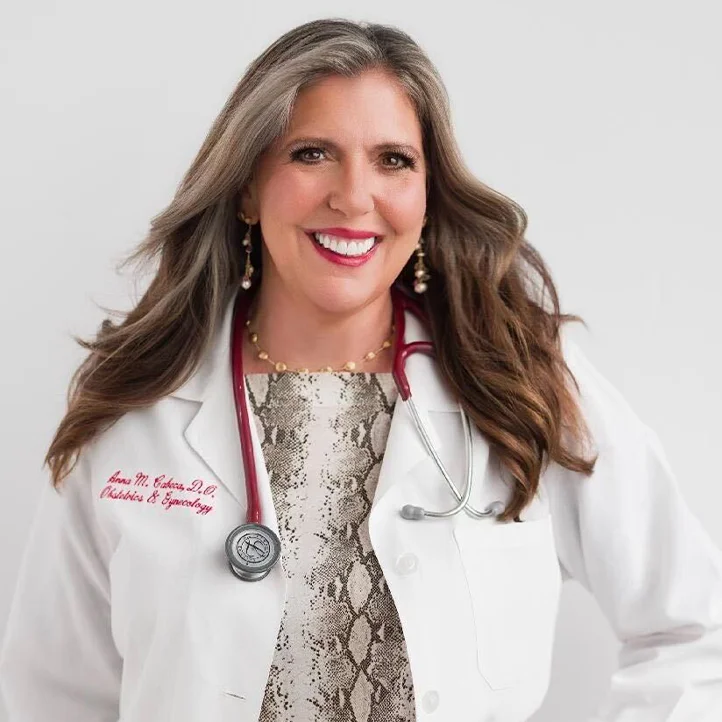
Anna Cabeca, DO, OBGYN, FACOG—known as “Dr. Anna, the Girlfriend Doctor”—is a triple board-certified OB-GYN, hormone expert, and bestselling author of The Hormone Fix, Keto-Green 16, and MenuPause. A fellow of gynecology and obstetrics, integrative medicine, and anti-aging and regenerative medicine, she also holds advanced certifications in functional medicine, sexual health, and bioidentical hormone replacement therapy.
episode
Questions

What is Dr. Anna Cabeca known as?

The Girlfriend Doctor


episode
Timestamps
00:00

Introducing Dr. Anna, The Girlfriend Doctor

[00:00:00] Chalene Johnson:
Hey, before we get too far, I know I’ve talked a lot about the supplements that I take in powder form. There’s a lot of them, and there’s, of course, the things I take in capsule form, but I also take a few things in gummy form. And one of the things that I started taking about a year ago, actually when we were in Europe last year, is saffron.

[00:00:21] Chalene Johnson:
And I started taking it because I heard about quite a few studies that demonstrated that saffron made significant improvements in people’s… their ability to reduce their anxiety, to feel more relaxed, to have mental clarity, and of course, that’s gonna improve your sleep, right? Because that’s one of the main reasons why so many of us struggle to sleep at night.

[00:00:47] Chalene Johnson:
You lay down and your brain just doesn’t stop spinning. So anyways, I looked into it. You know me, I love to see a good study, and there’s been a ton of them. In fact, April through July 2025, this is brand new, a randomized double-blind placebo-controlled study looking at the impact of taking saffron daily for just three months, and the results I can tell you were pretty astonishing.

[00:01:16] Chalene Johnson:
A marked decrease in depression, anxiety, and stress. 72.3% of the participants in the saffron group achieved significant improvements on their mental state. So talking about having less anxiety, and of course, that I think is one of the reasons why it contributes to fewer sleep disturbances for those especially who are taking the saffron.

[00:01:39] Chalene Johnson:
So listen, I’m definitely not telling you to go off your SSRIs, and if you’re on an antidepressant, that’s awesome. But if you’re one of those people who you’ve been thinking like, “I don’t know. I don’t know what it is, I just… I don’t feel as happy as I usually am,” or, “I just feel kinda meh,” you know what I’m talking about.

[00:01:56] Chalene Johnson:
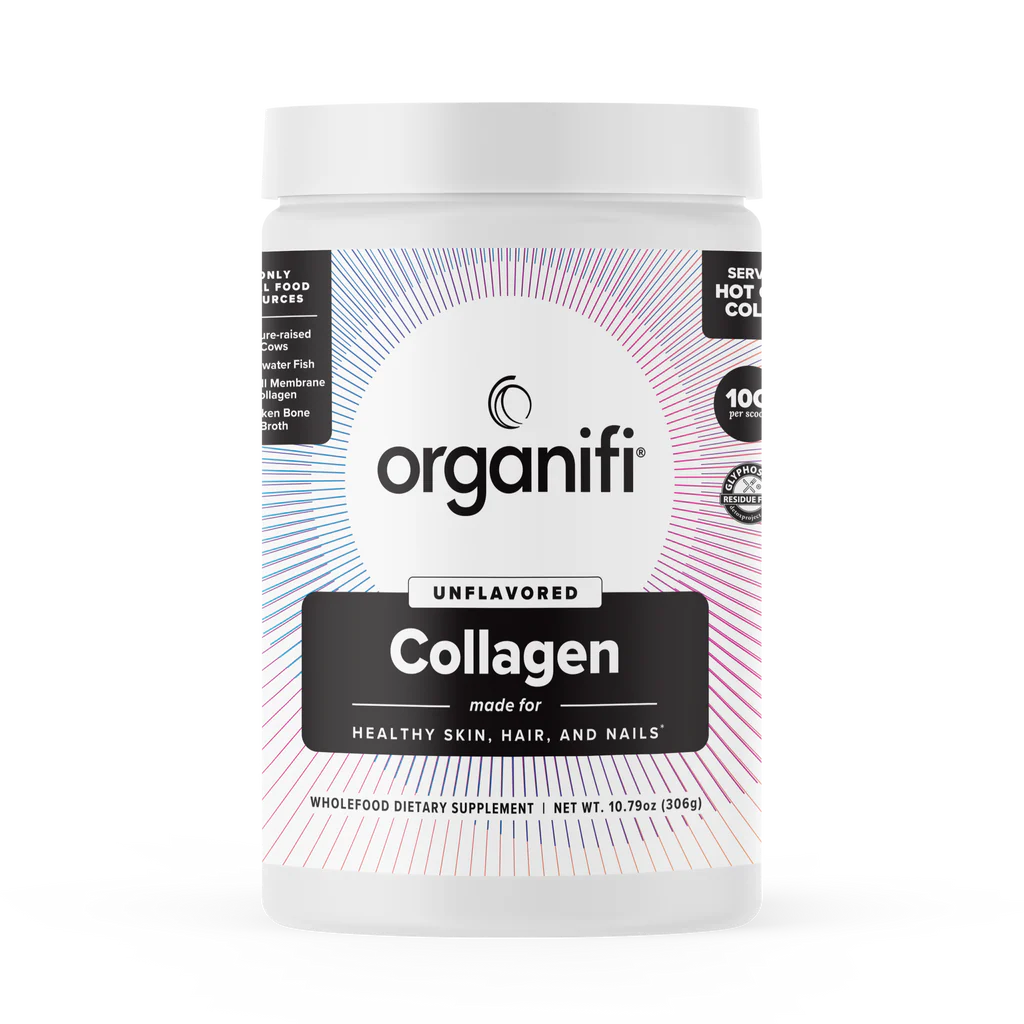
You can’t put your finger on it, but you’re like, “I’m just not as happy,” or, “Maybe I’m dealing with more anxiety,” or, “Things are bugging me more than they usually do.” You’ve heard me talk about Organifi for years, and Organifi came out with a saffron gummy that’s actually very, very tasty. So I am going to encourage you, if, if you’re already a customer of Organifi, next time you go to place an order, go to organifi.com/chalene.

[00:02:24] Chalene Johnson:
Use code Chalene. That always gets you 20% off. I take their Immunity daily. I take Pure daily. I take their collagen daily. All of these things are on the regular, and again, I started taking the Happy Drops. I don’t take those daily, but I’d say I take them, like, three, four times a week And I’ve noticed a difference.

[00:02:48] Chalene Johnson:
So I want you to check ’em out. Try them the next time you’re over at Organifi, or, or just go there right now. Go to organifi.com/chalene. You get 20% off when you use code Chalene, and we love Organifi. So it’s O-R-G-A-N-I-F-I.com/chalene for 20% off. Dr. Anna is a triple board certified OBGYN, an obstetrician, a gynecologist, an integrative medical and regenerative medicine expert.

[00:03:15] Chalene Johnson:
She has advanced trainings in sexual health and hormone replacement therapy. She’s the bestselling author of the book The Hormone Fix and MenuPause. She lectures all over the world on intimacy, hormones, and the flow of love and desire over time. If you prefer simplified explanations, someone who is blunt, funny, and honest, you’re gonna love this conversation.


00:03:36

Menopause Symptoms Women Suffer Through in Silence

[00:03:36] Chalene Johnson:
Dr. Anna speaks from the heart, which is exactly why we call her The Girlfriend Doctor. Today, we’re talking about menopausal symptoms many women are struggling with but are too embarrassed to talk about. Please welcome to the show Dr. Anna. So women are experiencing burning, they’re experiencing incontinence, and sometimes it’s inconsistent, but having, like, very painful sex, but not all the time.

[00:04:01] Chalene Johnson:
And they’re experiencing these things that are kind of embarrassing. How common is this, and why does it seem to happen once we’re over 40?

[00:04:11] Dr Anna Cabeca:
Yeah, no, it’s a great question, and it’s just one of those things that I think, in talking to so many women about this issue, it is, uh, one of the areas that women have been suffering in silence.

[00:04:23] Dr Anna Cabeca:
I mean, they’ve really been suffering in silence. And the issue is that the body’s changing. Like, we get laugh lines and smile lines. Okay, not you, but- Laugh line- I had

[00:04:32] Chalene Johnson:
them removed.

[00:04:33] Dr Anna Cabeca:
There you go. Laugh lines and smile lines. It’s happening down there, the thinning of the tissue, the, you know, loss of the elasticity, the loss of the, the glandular secretions, like why women are getting dry eyes.

[00:04:45] Dr Anna Cabeca:
It’s happening down there, and that’s what we can do something about it. Just like we can use good anti-aging treatments on our face and all these different things, we can use it down there. And so that’s what I’ve been studying for, honestly, the last 20 years. Let’s turn back the hands of time down there, then we increase the enjoyment.

[00:05:04] Dr Anna Cabeca:
We have more comfort. We’re at home in our bodies. And I have to tell you a story. So I had a, a lovely patient in my, uh, practice, and she’s in her 70s. Mm-hmm. And she’s been married 52 years.
[00:05:19] Chalene Johnson:
Okay.

[00:05:19] Dr Anna Cabeca:
And so I started seeing her last year. Now she’s a functional medicine patient. She’s been on hormones for the last 20 years, doing all kinds of good supplements, and I started addressing the vaginal and bladder issues that she was doing topically, and addressing these issues.

[00:05:34] Dr Anna Cabeca:
And so I, I said, “How is your intimacy?” I’m curious about women who are over 70 having sex. Like, how is that? ‘Cause I’m hopeful, right? Yeah. I’m 60, so I’m like, “Okay, give me hope.” And so, so I’m asking my patient, “How is everything? How’s sex? Is it comfortable? What’s going on?” She goes, “Dr. Anna, since we fixed things down there, let me tell you this.”

[00:05:52] Dr Anna Cabeca:
And she says, “The first 25 years of our marriage, okay, sex was okay. The second 25 years, maybe just okay. The last year, since we fixed things down there, we have so much more fun and intimacy than the last 50 years.”

[00:06:08] Chalene Johnson:
Wow.

[00:06:08] Dr Anna Cabeca:
Right? Like, that inspires me, not just inside the bedroom, but outside. They’re even closer after all those years of marriage.

[00:06:16] Dr Anna Cabeca:
That’s inspirational.


00:06:18

Why Women Lose Interest in Sex After 40

[00:06:18] Chalene Johnson:
I have a girls’ group, and we, we talk about these things, and I think this is more common than we realize, women who say, “I can take it or leave it.” And part of that is it hasn’t been as fun. It’s oftentimes more painful. They’re dealing with dryness. Then they have, like, this negative association with the last time they had sex.

[00:06:40] Chalene Johnson:
Yep. And so I think your brain- feels that like, “Oh gosh, that, that was kind of painful.” So why would you be craving something that’s painful and not that fun? And then they’re like, “I can take it or leave it.” And they’re like, “My husband can take it or leave it now too.” And so they’re like, “What’s the problem?

[00:06:56] Chalene Johnson:
Why do I need to worry about this, Shalene?”

[00:06:58] Dr Anna Cabeca:
Yeah. That’s exactly what happens, and that’s how couples become roommates, and why one of the most read, widely read New York Times article was the article on sexless marriage. And this is what’s happening. When you address the issues that’s causing that desire, disconnect, or discomfort, from my research, that’s over 90% of it.

[00:07:19] Dr Anna Cabeca:
It’s one of these or a combination of all three that’s creating this loss of intimacy. And women feel like, okay, I’m just, you know, take it or leave it. I’m cut off from here down, and don’t even realize after the last time they had sex maybe they had a urinary tract infection- Mm-hmm … or experienced an odor or felt itchy.

[00:07:36] Dr Anna Cabeca:
And like, you know, you get it addressed at the time, but your body’s like, “Oh, no, I’m gonna keep you safe. I’m not gonna do that to you again. Let’s back off from this.”

[00:07:44] Chalene Johnson:
Mm.

[00:07:45] Dr Anna Cabeca:
And so ’cause what is intimacy? In order to have great orgasms, you need safety and trust. And so if your body’s not feeling safe, you know, it’s a protective mechanism.

[00:07:55] Dr Anna Cabeca:
Yeah. So address the issues. And to, for everyone listening, if their doctor’s not helping them address these issues, keep looking. Keep asking the questions. Do your own research. This is so important, and there’s so much we can do now that I didn’t have in my toolbox 20, 30 years ago.

[00:08:11] Chalene Johnson:
And on behalf of the doctors, you know, you just said you had this conversation with your patient.

[00:08:15] Chalene Johnson:
You said, “How’s your sex life?” I’m sure there’s male doctors out there. I don’t know, maybe I would feel kind of creeped out if my- Yeah. True … male doctor asked me that. I’d be like, “Why are you asking?” Even though it’s such a good question to ask. Yeah.

[00:08:27] Dr Anna Cabeca:
Yeah.

[00:08:27] Chalene Johnson:
And I think it’s so rare that we are. It’s something that women of a certain generation, like we were taught you just don’t talk about that.

[00:08:35] Chalene Johnson:
You don’t talk about sex. You didn’t hear it from your mother. We didn’t even talk about it as girlfriends. And so to talk to a stranger who we’re already intimidated by doctors, just most people are, is probably a big part of the reason why these conversations aren’t happening. But when you say that she’s experiencing these things and s- she doesn’t even realize it there.

[00:08:59] Chalene Johnson:
It’s on a subconscious level, she’s thinking associating it with something negative.

[00:09:03] Dr Anna Cabeca:
Yep.


00:09:04

The Real Health Risks of Ignoring Vaginal Health

[00:09:04] Chalene Johnson:
Aside from the fact that she might be f- moving further away from her partner- What is the harm in just kind of closing shop?

[00:09:12] Dr Anna Cabeca:
Yeah, because… Well, there’s, uh, several, right? We think of the list of one of the ways we increase the most healing, anti-aging, rejuvenating hormone in our body, oxytocin, is through pleasure, intimacy, touch, orgasm.

[00:09:27] Dr Anna Cabeca:
I mean, oxytocin is so powerful. And for me, it’s like the m- the queen mother of all hormones is oxytocin. So if we’re not having that intimacy, like we know when we’re in love how beautiful that feels, right? We look 10 years younger. So oxytocin is a huge healing hormone. It is a key factor in the lifestyle of people in the blue zones, our longest living populations in the world.

[00:09:51] Chalene Johnson:
Yeah.

[00:09:52] Dr Anna Cabeca:
Things that increase oxytocin are so important: community, trust, faith, music, laughter, dancing. You did that really well. Can’t be more. Thank you. I mean, there was such a… That’s an oxytocin-producing event. Yes, it is. So all of the intimacy, sexual intimacy, pleasure, that increases oxytocin. The, so that’s number one for looking better, feeling better, having a stronger immune system.

[00:10:14] Dr Anna Cabeca:
Number two is because vaginal and pelvic health-

[00:10:16] Chalene Johnson:
Yeah …

[00:10:16] Dr Anna Cabeca:
is essential for life, for quality of health. ‘Cause if we’re not addressing issues down there, increase of urinary tract infections, incontinence. Incontinence ex- affects over half of women over 50, and I would say 85% of women over 60. And, you know, oh my God, I was just looking for organic tampons and pads for my daughter at the local drugstore.

[00:10:39] Chalene Johnson:
Mm-hmm.

[00:10:40] Dr Anna Cabeca:
And it was a row and a half of products. Mm-hmm. But the incontinence aisle was two rows of products. It is a bigger issue than we’re talking about. So women, we have to keep speaking up because there’s so much we can do to change that, to be, stay and maintain continence. So that’s another issue.

[00:10:57] Dr Anna Cabeca:
Urinary tract infections, incontinence, vaginal issues. If we lose the health of a, the vagina, that creates a dysbiotic microbiome and that increases us to vaginal infections, even vaginal and cervical cancer. That’s a life-threatening issue. It’s so important. Incontinence issues, urinary tract infections, vaginal diseases are life-threatening issues.

[00:11:20] Dr Anna Cabeca:
You can’t ignore that, so.

[00:11:22] Chalene Johnson:
That’s insane, because I do think we have minimized it in our brains. Yeah. Like that area of our body is just about sex, and it’s not. Yeah. It’s our total wellness. It’s our ability to live and age powerfully.

[00:11:33] Dr Anna Cabeca:
Yep

[00:11:34] Chalene Johnson:
That’s amazing. Um-

[00:11:35] Dr Anna Cabeca:
I, I do wanna go back to the, the topic- Mm-hmm

[00:11:38] Dr Anna Cabeca:
’cause I train a lot of physicians in this area, and I always tell physicians, “Okay, if you’re not comfortable talking about sex, intimacy, vaginal health with your patient, please refer them to someone who is.” ‘Cause sometimes, like, if you’re not comfortable, they’re not comfortable, and you can just say, “I’m not comfortable, but I know it’s important to your health.

[00:11:54] Dr Anna Cabeca:
How is everything, you know, with vaginal health, sexual health, et cetera?” That’s really important because women have been told if they’ve had a hysterectomy or if they’re over a certain age, they don’t need Pap smears or pelvic exams, and that’s- Right … that’s not true. That’s not true, and it’s a mistake for our medical system to be Saying that or the guidelines, because women are more sexually active.

[00:12:18] Dr Anna Cabeca:
Maybe they’re, you know, have a new partner in the second half of their life, and so that increases their risk of issues with vaginal and pelvic health. And a good doctor, a good gynecologist, is looking at the pelvis, the pelvic health, the vaginal health as a reflection of her whole body wellness.

[00:12:35] Chalene Johnson:
Mm.

[00:12:36] Dr Anna Cabeca:
And yeah, we have to do a better job of that.

[00:12:39] Chalene Johnson:
If you’re a woman who is in hormone decline, meaning perimenopause, menopause, every single hormone impacts your sleep. So that is why 80% of women who are perimenopausal and older have sleep disturbances s- say that it’s one of the things that just absolutely wrecks their energy, and it does. So for those of you who’ve tried melatonin and you’re like, “It just, I don’t know, makes me have weird dreams, or I feel groggy in the morning,” I’ve done some research, ’cause I used to think like, “Are people just saying that?”


00:13:03

What Women With Hysterectomies Need to Know

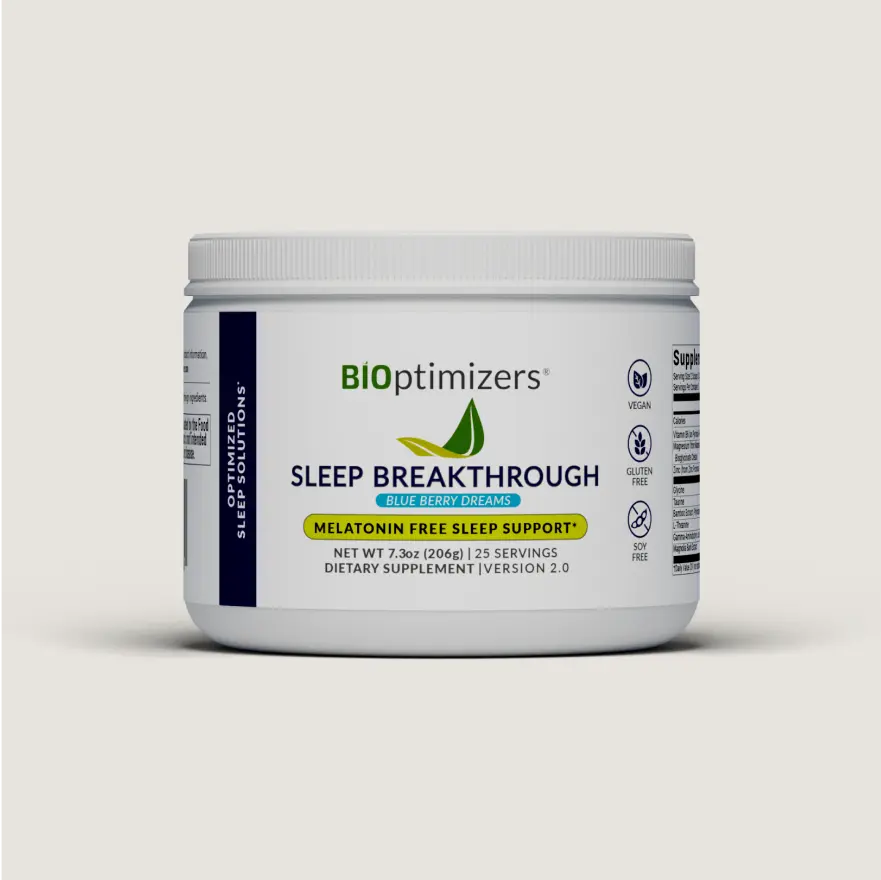
[00:13:14] Chalene Johnson: No, it is a thing, and I think we just assume melatonin is what we need. But your body produces melatonin, and if you are sensitive to it, I wanna share with you… Well, it’s actually one product. It’s called Sleep Breakthrough, but they have two different formulas. Okay, so when you go to this link, I’m gonna give it to you, and it’s really important you go to this link so you can find them, otherwise you kinda have to look around.

[00:13:36] Chalene Johnson: So please remember to go to chalene.com/sleep, and that’s gonna take you exactly to where I want you to be. So they have two different formulas. Let me explain this. The blueberry formula is designed for deep sleep, and deep sleep is what you need for your body to feel restored, for your body to be recovered.

[00:13:59] Chalene Johnson: This formula’s also been designed to help you, like, fall asleep faster. And when you have deep sleep, that’s why you can wake up, and even if you didn’t get a lot of sleep, if you got good deep sleep, you’re gonna wake up and feel like, “Oh, wow, I actually feel good.” And I can tell you that this is true by looking at my sleep ring scores.

[00:14:16] Chalene Johnson: Okay, then they have a second formula. It’s the tropical, okay? Now, the tropical is, it’s got different ingredients. This one is going to give you more REM sleep, so you’re gonna have enhanced dream activity, but there will be no grogginess because there’s no melatonin in it. It’s got magnolia. It’s got all these other natural ingredients that are non-hormonal that help you to stay asleep longer.

[00:14:43] Chalene Johnson: So for me, again, this is just my personal preference, I have both of them, and instead of doing two scoops of one, I do one scoop of each, ’cause I need the deep, and lately my issue has been I’ve been waking up too early and I can’t fall back to sleep. So I just do one scoop of each You know, it’s the blueberry and the tropical.

[00:15:01] Chalene Johnson: That’s fine. They go great together. Now, this is a weird hack, but this is how I like to do it, like a bedtime cocktail. I put a splash of my oat milk coffee creamer, sweet cream, in it. Oh. And I serve it over ice, like it’s a shot, and it’s lights out. Stuff is great. I tested it for almost 45 days before I ever talked to you about it, and then I wanted to try the other, what do you call it, the other formulation to see, okay, which one do I like better?

[00:15:28] Chalene Johnson: And I wish I could tell you, like, one or the other, ’cause they do both serve different purposes. But I’m like, if you’re gonna go for it, get both and just do a scoop of each. You won’t regret it. And they do have different ingredients. There’s some overlap, but they both have a little bit of magnesium, potassium, glycine, taurine, bamboo leaf, L-theanine, what do you call it, magnolia bark.

[00:15:50] Chalene Johnson: But they’re both a little different, so they will each serve a different purpose. And of course, because you’re a listener of the show, you get my discount. Plus, honestly, this is a great way for you to support the show, and I very much appreciate you doing so and getting great sleep. Go to chalene.com/sleep.

[00:16:07] Chalene Johnson: So many women will write to me in my comments and they’ll say, “I have no idea what I should be doing or not. I had a hysterectomy after a baby at age 35,” and they, they have no idea, “Am I gonna go through perimenopause? Should I be on hormone replacement therapy now?” So to a woman who has had a hysterectomy, maybe even younger than that, what does she need to know?

[00:16:29] Dr Anna Cabeca: Yeah. She needs to know, like, she needs to know to protect her hormones. Like, this is all about supporting your body. If she has her ovaries, if she doesn’t have her ovaries, absolutely she has to be on hormones. If you’ve had a hysterectomy and your ovaries were removed, you have to be on estrogen, progesterone, and testosterone.

[00:16:45] Dr Anna Cabeca: And this is another big myth or mistake that the medical society’s been told, if you don’t have a uterus, you don’t need progesterone. You don’t need a synthetic progestin, like Provera, but you do need bioidentical progesterone. That’s the most neuroprotective hormone that we have. It protects our breast, our bones, our brain.

[00:17:06] Dr Anna Cabeca: And women who have had their uterus removed have been told for decades, “Oh, you don’t need progesterone.” But I will tell you, progesterone helps you sleep, lifts the brain fog, helps memory and cognition, and it’s one of the first hormones I replace, even before estrogen.

[00:17:21] Chalene Johnson: Mm.

[00:17:22] Dr Anna Cabeca:
So that woman, using bioidentical progesterone topically, a cream, I like to use progesterone with pregnenolone.

[00:17:29] Dr Anna Cabeca:
And so, you know, using a cream or taking progesterone orally or vaginally, look, there’s m- more, well, we got a lot of options. Yeah. So that’s really beneficial. So if she’s had a hysterectomy, bioidentical progesterone can be game-changing. And yeah, and test, don’t guess, right? Oh. Test for your hormones.

[00:17:49] Chalene Johnson:
Where does she go to get tested?

[00:17:50] Chalene Johnson:
Who does she go to? Es- especially if her doctor is someone who isn’t asking these questions. Yeah. Like, you know, like my doctor, my OBGYN who suggested that I just do an ablation, I, I didn’t know- Yeah … that I should have my hormones tested. So first of all, where does she go? Does she need to go to an OBGYN?

[00:18:07] Chalene Johnson:
Does she go to a integrative practitioner? How does she find the right doctor?


00:18:11

How to Find a Hormone Doctor Who Actually Gets It

[00:18:11] Dr Anna Cabeca:
Yeah. Yeah, no, that’s a really good question. And I think, like, one of the ways, because I do a lot of compounding, customization of hormones for women, and so I often tell women in my audience, call your local compounding pharmacist.

[00:18:24] Chalene Johnson:
Oh.

[00:18:25] Dr Anna Cabeca:
Because they will know who’s doing it right and who’s not, right?

[00:18:28] Chalene Johnson:
Girl, that is, that is a tip I’ve not heard before. Mic drop. That’s brilliant.

[00:18:34] Dr Anna Cabeca:
It makes a huge difference.

[00:18:36] Chalene Johnson:
But you know where to go. And what if there isn’t a compounding pharmacy in the city that she lives in?

[00:18:39] Dr Anna Cabeca:
She can call the, there’s the board of compounding pharmacists called pccarx.com.

[00:18:45] Dr Anna Cabeca:
Mm-hmm. And she can call or go onto their website and see who is one of their certified pharmacist or who they may have in their area that they recommend, or doctors who have been through that course. That could be beneficial.

[00:18:58] Chalene Johnson:
That’s great. I found this clip and I wanted to show it to you Well, I had an unfortunate experience that ended all my sex urges and all my sex thoughts.


00:19:08

The Roseanne Clip: When a UTI Ends Your Sex Life

[00:19:08] Chalene Johnson:
Because, you know, when you’re old, things happen to you as a woman if you’re not gonna take all the hormones, you know, and you’re just gonna try to age gracefully with your vagina and all. Well, the one thing that was- The one thing that was shocking is that I found out the only thing thin on me is my vaginal walls.

[00:19:28] Chalene Johnson:
Oh, yeah. Yeah. And that’s what happens. The older you get, they get more and more thin. So you know, your husband, he’s getting old too, so of course he’s gotta go on the Viagra- Oh, yeah … ’cause you know, this and that and the other. Well, what ends up happening just isn’t good. And so there I was. Every time I, you know, we did it, well, I got a horrible, what are they called?

[00:19:52] Chalene Johnson:
UTI. And, uh, the last time I got it was the last time I had sex. Well, they had to take me to the hospital. I started peeing blood in Ralphs. Oh.

[00:20:02] Dr Anna Cabeca:
At Ralphs?

[00:20:02] Chalene Johnson:
At Ralphs.

[00:20:03] Dr Anna Cabeca:
Oh, wow. Yeah. I’ve done some things… I’ve never done that at Ralphs.

[00:20:07] Chalene Johnson:
Yeah. It was so scary. They had to take me to the hospital, and they had to give me three morphine shots for my whatever it was to let loose in the bladder thing.

[00:20:17] Dr Anna Cabeca:
Oh, and they give it to you right in your vagina?

[00:20:19] Chalene Johnson:
Oh, no. No, they give it to me right in the butt. Oh, no- Oh … not in the vagina. Thank God, ’cause I, I would’ve jumped out the window and just- Yeah, dude … killed myself.

[00:20:27] Dr Anna Cabeca:
Oh, if I see anybody put it down… Yeah.

[00:20:29] Chalene Johnson:
Mm-mm.

[00:20:30] Dr Anna Cabeca:
I would… God, I would hate that.

[00:20:32] Chalene Johnson:
But then I was like, “Sorry, Charlie,” to my boyfriend.

[00:20:35] Chalene Johnson:
“Sorry, Charlie, you’re gonna have to whatever. You know, whatever you do, don’t… Just whatever. Keep it to yourself.”

[00:20:42] Dr Anna Cabeca:
Yeah.

[00:20:43] Chalene Johnson:
I’m done. I’m over it. I’m never going through that again.”

[00:20:47] Dr Anna Cabeca:
Oh my gosh. Oh, that’s so, that’s so disappointing. W- she, she literally said- That’s tragic …

[00:20:52] Chalene Johnson:
it’s the last time

[00:20:54] Dr Anna Cabeca:
she had sex. The last time.

[00:20:54] Dr Anna Cabeca:
That’s tragic. That’s tragic. And a- again, like, what a shame, because that’s so preventable. That is so preventable, and now we know so much better. So I had a patient, and this is, I, I don’t know how old, uh, Roseanne is and- It’s a

[00:21:07] Chalene Johnson:
recent… Oh, how old Pete

[00:21:08] Dr Anna Cabeca:
is, I’m not sure either … that patient. Yeah. But, you know, I had a patient, she was 52, and she’d been divorced for 20 years.


00:21:14

How to Stop Recurring UTIs After Sex

[00:21:14] Dr Anna Cabeca:
Her kids finally went off to college, and she’s met the man of her, of her dreams, and they’re having great intimacy. They’re having so much fun together, and she calls me. She said, “Dr. Anne, I’m on my third round of antibiotics for a urinary tract infection. Every time we have sex, I get a UTI.” She goes, “I love sex.

[00:21:31] Dr Anna Cabeca:
I love our intimacy, but now my gynecologist wants to put me on a daily antibiotic, and I know that’s not right.” And she goes, “What do you wanna do?” I say, “First of all, you know, thank you for calling. Let’s start with we wanna prevent that from happening, so we’re gonna increase your vi- we’re gonna take vitamin C, 2,000 milligrams per day.”

[00:21:50] Dr Anna Cabeca:
Hmm. 2,000 to 4,000 milligrams per day of vitamin C. Use a topical DHEA combination cream on that area. Pee after you have sex. Hmm. And swear, she had no more issues, no more urinary tract infections after sex. They got married two years later. Wow. And she said to me, she said, “You know, our intimacy was so important, I could feel myself not wanting it, pulling away until we addressed that issue, and that made all the difference in the world.”

[00:22:19] Dr Anna Cabeca:
And now I would add, and I would add this to Roseanne too , is a vaginal probiotic. A vaginal bladder health targeted probiotic. Because we’ve killed off the first line of defense in the bladder, in the vagina. And the same bacteria that’s predominant in the bladder is, is key for the vagina, and vice versa.

[00:22:37] Dr Anna Cabeca:
So we know that if we don’t have enough of this bacteria, not only does it increase urinary tract infections, these strains of lactobacilli, but it increases urinary tract infections. It increases incontinence. It increases urgency symptoms, and vaginal discharge odor and infection. Wow. But it’s so easy.

[00:22:55] Dr Anna Cabeca:
It’s so easy to fix and then maintain it with proper hormonal support. So- Game-changing …

[00:23:01] Chalene Johnson:
every time I do an antibiotic, that’s my biggest fear- Yep … is that I’m going to have a UTI. The doctors will, uh, if they don’t prescribe it, then I just start taking a probiotic, but should I be taking a vaginal probiotic?

[00:23:12] Chalene Johnson:
Vaginally

[00:23:14] Dr Anna Cabeca:
targeted probiotic. Oh. So the species are Lactobacillus crispatus, iners, jensenii, gasseri, and firstinosus.

[00:23:21] Chalene Johnson:
Do I have to remember any of that?

[00:23:22] Dr Anna Cabeca:
No. Okay. Good information for you. I know. I mean, that is critical. Now I even have young women on it because as, you know, as a gynecologist, we always checked, you know, we were looking under a microscope, we were looking for disease, right?

[00:23:36] Dr Anna Cabeca:
We were not could get healthy cells and bacteria, and then we tested only for disease. Now we have ways to do vaginal microbiome testing for the healthy bacteria like we do for the gut when we’re looking, as a functional doc, we always look at a digestive stool analysis to look at the bacteria. And so we can do that for the vagina.

[00:23:56] Dr Anna Cabeca:
Mm. And as I’ve been doing that, I see very little, often no protective bacteria. So we have to re-seed it. Oral targeted vaginal probiotic or vaginal inserted probiotic that’s targeted with these specific strains. It is game-changing for women. It makes all the difference. I have a patient recently, she’s like, “Doctor Anna…”

[00:24:19] Dr Anna Cabeca:
She’s been using, you know, my topical hormone products for a long time, and she started the VB probiotic, and she’s 54, and she said, “I’m not getting up at night to pee anymore.” Wow. Like, that was just reseeding those protective bacteria makes all the difference.

[00:24:35] Chalene Johnson:
What we’ll do for those who are listening, we’ll put your recommendation for a vaginal probiotic, ’cause I, I wouldn’t even know where to start.

[00:24:44] Chalene Johnson:
So we’ll give your recommendations. We will put those in the show description. We’ve talked a lot about intimacy, that clip from Roseanne. So she’s 73 years old, and I think about my mother’s generation, and no matter how many times I tell her, like, “Mom, but that’s not true anymore. We’ve, we’ve disproven that, and that’s from, from outdated, incorrect research, and that’s why you believe that.”

[00:25:04] Chalene Johnson:
And she’s like, “Oh, well, I don’t need to worry about it now,” because she’ll say, “I’m past menopause.” Yeah. I’m like, “Mom, you’re still in menopause.” So will you speak to the woman who is over 60, who maybe isn’t with a partner, isn’t worried about intimacy, and also believes, “Why do I need to worry about this?

[00:25:20] Chalene Johnson:
I’m past, I’m past that”?

[00:25:21] Dr Anna Cabeca:
Right. Right. And well, it is, like, so critical for the quality of our life, again, to decrease the risk of incontinence issues, urinary tract infections, vaginal infections, cervical cancer. I mean, these are real issues. Now, why women feel this way is that discomfort, oftentimes even the GYN exam.

[00:25:41] Chalene Johnson:
Yeah.

[00:25:41] Dr Anna Cabeca:
I’ve had patients like, “Oh, my God, I can’t bear to think of another Pap smear because the last one I had,” remember, their, maybe their last experience, was, you know, painful in a, in a GYN office. Mm. Right? It was a painful… I’m like, “Okay, we don’t have to do that. We can really improve the elasticity, the moisture, the flexibility, the health of the vagina,” and it is critically important.

[00:26:02] Dr Anna Cabeca:
For me as a gynecologist, I swear I’m so passionate about vaginal health. Beyond sexual health. I mean, that’s a bonus. That is such an important bonus, ’cause intimacy lights us up. Like, m- my 70-year-old patient, why are, why are we giving up on this? Yeah. Life can be so much better if we address the issue that’s causing the disconnect.

[00:26:22] Chalene Johnson:
Yeah.

[00:26:23] Dr Anna Cabeca:
Yeah. There’s no age limit on this.


00:26:26

Sexual CPR and Rebuilding Intimacy After Menopause

[00:26:26] Chalene Johnson:
How often do you think when women believe, uh, well, i- intimacy just isn’t that big of a deal to me anymore because I feel disconnected from my partner in that way. Is it sometimes just they, it, it’s not the physical part, it is the mental side of things?

[00:26:42] Dr Anna Cabeca:
Yeah. It can definitely be the mental part and the relationship.

[00:26:45] Chalene Johnson:
Mm.

[00:26:46] Dr Anna Cabeca:
And the- but there’s always like, okay, let me ask why. How can I improve the quality of our relationship? So I have a entire program, I call it sexual CPR. Uh-huh. I like that. ‘Cause you think of CPR as, yeah, as a good thing. So in, in a very holistic way, but I say there’s the ABCs, you know, which is important.

[00:27:03] Dr Anna Cabeca:
If we’re feeling, like, disconnected from our, our partner, it’s important to understand, okay, my accepting my… So the ABCs of sexual CPR. Accepting where I am now.

[00:27:14] Chalene Johnson:
Mm.

[00:27:14] Dr Anna Cabeca:
Being present during intimacy and conversations in and out of the bedroom, and communicating what makes me feel good, what makes me happy. And those three things are key to kind of resuscitate.

[00:27:27] Dr Anna Cabeca:
And, you know, intimacy and sexual pleasure, I, I would say no partner, no problem, right? Mm. No partner, no problem. Se- our body’s designed for pleasure. And so it’s important to experience it as pleasure for us, for the woman, and I think so many women think, oh, I, I, like with Roseanne, I gotta check this off for my husband.

[00:27:50] Dr Anna Cabeca:
He’s got his Viagra. Yeah. Yeah. Right? And he’s got something to do, but he wants her pleasure, right? Men want her turn on. Their number one turn on is her turn on.

[00:28:01] Chalene Johnson:
That’s true.

[00:28:02] Dr Anna Cabeca:
That is 100% true, right? Right. And so it’s for us, this experience. Intimacy, no, you know, pleasure, no partner. It is loving our body, accepting it, taking care of every inch of it, head to toe.

[00:28:16] Chalene Johnson:
Yeah. You said something there that made me think about how reluctant we are to have these conversations. Again, I hope it’s different for the younger generations, but I, I know for women my age and older, to talk to a man about what we need also feels like we’re saying, “You’re not doing a good job.” And we think about their egos and we th- and, uh, these conversations, you’ve been with someone for 25 years and now you’re suddenly gonna say, “I really don’t like it when you do that,” or, “I really wish you would do this.”


00:28:46

How to Talk to Your Partner About What You Need

[00:28:46] Chalene Johnson :
How do you help your patients bridge that uncomfortable, awkward gap when they don’t know when to talk about this or how to talk about it? Let’s just start with the when do we talk about this?

[00:28:59] Dr Anna Cabeca:
When do we talk about… When it, when it comes up. When it comes into your conscientiousness. If you’re thinking about it, we need to talk about it.

[00:29:06] Dr Anna Cabeca:
Not during intimacy.

[00:29:07] Chalene Johnson :
Okay. There we go.

[00:29:07] Dr Anna Cabeca:
That’s good. Not during intimacy. Because there’s no area, male or female, the most accomplished, sexiest individuals on the world, there’s no area in our lives that a woman or man are more vulnerable than when it comes to our sexuality- Mm … or sexual performance. Mm. It is a key issue.

[00:29:24] Dr Anna Cabeca:
A- and I learned this because I had a patient in my practice and she’d been married 15 years to her partner, and as she says, “You know, Dr. Anne, I just have no sex drive.” And I said- she goes- I said, “Well, once you get started, how are things?” She goes, “Once we get started, I’m good to go.” Hmm. Like, “I’m turned on and all that’s good.”

[00:29:42] Dr Anna Cabeca:
Yes. “But you know, he, he loves to play with my nipples, and I don’t like it at all.” And I said, “Well, what did he do when you told him?” She goes, “I won’t tell him that. He loves to do it.” And I said, “Oh no, he wants your pleasure. He wants your pleasure.” So you know, now, like, bring it up in conversation, in date night.

[00:29:59] Dr Anna Cabeca:
Maybe you’re doing dishes together. You’re having a conversation that feels very natural, safe, in a safe where you feel safe and comfortable and, and just say, “You know,” like, “there are some things I’d like to try with you or experience.” Okay. “These things really turn me on.” It’s like the whole sandwich conversation.

[00:30:15] Dr Anna Cabeca:
Yeah, yeah. You have to do it with sex, too.

[00:30:17] Chalene Johnson :
Yeah.

[00:30:17] Dr Anna Cabeca:
Like, “These things really turn me on. I love it when you do this. I like to experience this. I don’t like my nipples touched. You know, they’re, it doesn’t feel pleasurable, you know, and I, I would prefer to try something different or the, you know, around this area of my breast laterally, great.

[00:30:34] Dr Anna Cabeca:
But not the nipples. It doesn’t feel good.”

[00:30:36] Chalene Johnson :
Yeah. ”

[00:30:37] Dr Anna Cabeca:
But these are some other things I’d like us to try.”

[00:30:39] Chalene Johnson :
Yeah.

[00:30:40] Dr Anna Cabeca:
And if you bring it up in that way, he will feel like, “Oh my God. Well first, why didn’t you tell me sooner? I’m, I’m doing this for you,” right? But it’s you’ve created now let’s talk about what are some things you’d like to do.

[00:30:51] Chalene Johnson :
Mm-hmm.

[00:30:52] Dr Anna Cabeca:
You know, what are some areas that, you know, maybe we haven’t talked about exploring that we should, but like touch, you know. Is there anything else we can experience pleasure-wise?

[00:31:03] Chalene Johnson :
Yeah.

[00:31:04] Dr Anna Cabeca:
Have we explored more, you know, what other erogenous zones can we explore? I mean, w- we have erogenous zones all over our body.

[00:31:11] Dr Anna Cabeca:
Men, too. Being open to exploring and have the conversation. And we need to practice this outside the bedroom. What I like, what makes me feel good-

[00:31:21] Chalene Johnson :
Oh …

[00:31:21] Dr Anna Cabeca:
what, you know, brings me pleasure.

[00:31:23] Chalene Johnson :
When you say outside the bedroom, do you mean to have the conversation outside the bedroom? Or talk about things that we like that have nothing to do with intimacy?

[00:31:29] Chalene Johnson :
Yes.

[00:31:30] Dr Anna Cabeca:
Start with that- Oh … because that’s the practice. That’s the practice, to start with things like, “You know, I really like it when you help me do dishes like this.” I mean, you know, some- Yeah … we don’t say things like that. Yeah. We just leave it for, I don’t know, leave it up for interpretation.

[00:31:47] Chalene Johnson :
Right.

[00:31:47] Dr Anna Cabeca:
Like, of course he- They’re gonna read our mind

[00:31:48] Dr Anna Cabeca:
of course he must know that I love him washing the dishes with me, but he has no idea. He has no clue.

[00:31:55] Chalene Johnson :
Yeah.

[00:31:55] Dr Anna Cabeca:
So bringing these thing up. And another issue too is the environment. So, um, you know, what’s a turn-off? Dirty clothes on the floor in the bedroom? If that’s a turn-off for you- Yeah … you have to explain it.

[00:32:06] Dr Anna Cabeca:
Believe me, when you pick up, you know, when all your cl- you know, when you don’t leave dirty underwear on the floor, whatever it is, dirty clothes on the floor, you know, when the room is clean, I’m turned on. But when I- Yeah … come in and there’s dirty clothes on the floor, it’s a turn-off.

[00:32:20] Chalene Johnson :
I think that’s really important.

[00:32:21] Chalene Johnson:
And I know we’re joking about that and, and someone, a man might assume that- that’s a manipulation. But really what’s going on there is how you feel towards someone. Yeah. Like, it’s hard to feel resentful and also, uh, sexual towards someone, you know? Right. I had a girlfriend once who was… She’s no longer married to this guy, but she- And she was like, “I, I have slipped into the role of being a parent.”

[00:32:45] Dr Anna Cabeca:
Mm.

[00:32:46] Chalene Johnson:
And I am so annoyed with all the things I have to parent him on, that when it comes to intimacy, I don’t look at him as someone who’s my equal and my partner. I f- I feel like I’m his mom.”

[00:32:58] Dr Anna Cabeca:
Ugh.

[00:32:58] Chalene Johnson : And that doesn’t make me wanna connect in that way.” Oh,

[00:33:01] Dr Anna Cabeca:
that’s true.

[00:33:02] Chalene Johnson :
So it, it is more than just physical things that we need to work out in our relationships in order to improve our intimacy.

[00:33:10] Chalene Johnson:
But for that woman who, again, is thinking about the thinning of the vaginal wall, the thinning of our skin, like our skin gets thinner everywhere and we put topical things on our face, on our neck, on our hands. But can she reverse some of those symptoms that she’s experiencing vaginally? Can you thicken your vaginal wall?


00:33:28

Can You Reverse Vaginal Atrophy

[00:33:28] Dr Anna Cabeca:
Oh, absolutely. Absolutely. And in your 70s, in your 80s, you can improve it, and that, with that, improve all the other symptoms. So example, you know, I had a client who, you know, first time she came in, significant vaginal atrophy. Pap smear was very challenging. So I said, “Okay, well, we’re not… You know, there’s no reason to have pain, right?

[00:33:48] Dr Anna Cabeca:
There’s no reason to have discomfort. Let’s address these issues.” And we used the topical hormonal therapy, and-

[00:33:54] Chalene Johnson :
So an estrogen cream?

[00:33:55] Dr Anna Cabeca:
Uh, I use DHEA. Okay. Because DHEA improves the deeper levels of the vagina. Estrogen works on the mucosal wall.

[00:34:02] Chalene Johnson :
Okay.

[00:34:03] Dr Anna Cabeca:
DHEA works on the collagen, the muscle layers- Wow … the elasticity, the flexibility.

[00:34:09] Dr Anna Cabeca:
So that really turns back the hands of time, ’cause DHEA converts to testosterone and estrogen, so you kind of get a dual benefit. And so with that, you restore the elasticity.

[00:34:20] Chalene Johnson :
Okay.

[00:34:20] Dr Anna Cabeca:
And within, like, two months, literally, no problem with doing an exam. So

[00:34:25] Chalene Johnson :
you’re ta- This is a DHEA cream.

[00:34:27] Dr Anna Cabeca:
Cream. Yeah, cream.

[00:34:27] Chalene Johnson :
And do I need to ask my…

[00:34:30] Chalene Johnson :
Do I have to get a prescription for this?

[00:34:31] Dr Anna Cabeca:
So I have- Worked with formulating DHEA with plant stem cells of the alpine rose. Okay. These amazing plant stem cells that are very rejuvenating also, and, and help with collagen initiation or- Okay … with the collagen stimulation.

[00:34:51] Chalene Johnson :
Mm-hmm.

[00:34:51] Dr Anna Cabeca:
So this is over the counter.

[00:34:53] Dr Anna Cabeca:
Okay. You don’t need a prescription. And in the US, DHEA is an over-the-counter supplement.

[00:34:58] Chalene Johnson :
What age should a woman… Uh, uh, and is this like a daily thing that you would recommend women do?

[00:35:02] Dr Anna Cabeca:
I recommend it daily.

[00:35:03] Chalene Johnson :
Do I need to have symptoms to start using, or do you, would you just recommend women, just like face cream, you should start in your, you know, as early as you think about it because it’s helping tissues?

[00:35:12] Dr Anna Cabeca:
Definitely in your 30s, and defin- well, definitely in your 40s.

[00:35:15] Chalene Johnson :
Okay.

[00:35:16] Dr Anna Cabeca:
Now, we’ve had a clinic in Arizona that worked with female genital mutilation, the, uh, a very unique population. But because in OBGYN they had significantly traumatic childbirth, they started using- Oh … this formulation on them in prepartum and postpartum, and they had complete improvements, like im- improvement in elasticity, et cetera.

[00:35:39] Dr Anna Cabeca:
So in a postpartum population, sometimes to help restore that elasticity very quickly, ’cause we’ll experience, especially if we’re breastfeeding, we experience dryness, vaginal dryness and irritation. So keeping that tissue healthy. Again, if we’re thinking about keeping our, you know, exercising, pelvic floor exercises, other exercises for our body, and we’re thinking about keeping our skin healthy, nutrition from the inside out, all of that’s really important.

[00:36:05] Dr Anna Cabeca:
There’s not an age limit, but definitely when our hormones start to decline in our 40s-

[00:36:10] Chalene Johnson :
Mm-hmm …

[00:36:10] Dr Anna Cabeca:
it’s a preventative. It can definitely be preventative, but it’s never too late.

[00:36:14] Chalene Johnson :
So if I’m, personally, I’m gonna ask for it myself, if I’m already doing estrogen systemically, I’m taking a… Personally, I’m on an, a estrogen lozenge or a troche, I guess do, do I need to do a DHEA?

[00:36:28] Dr Anna Cabeca: I highly recommend it. Really? And see the difference. Experience the difference for yourself, because even if we’re on oral systemic, you know, we’re using cream. People are using testosterone behind their knees, and don’t even ask me why. Like, testosterone’s so good. Use it around the clitoris. Use it on the labia.

[00:36:44] Dr Anna Cabeca:
Use it, you know, on the, you know, chest. Um, you’re not gonna get chest hair, so don’t worry. But it’s so well-absorbed in these other areas and improves collagen. Mm. I mean, it’s good. Testosterone’s so good. And same with DHEA. So if you’re not using it in the area topically, you’re not gonna get the, the benefit.

[00:37:03] Dr Anna Cabeca:
I see. So you have to, even if you’re taking oral DHEA, using topically to this area, and I, and I will say clitoris to anus, keep that tissue healthy. It is critically important. It makes a difference. Yeah. ‘Cause systemic’s not gonna get there.

[00:37:19] Chalene Johnson :
Okay, so recently one of my girlfriends who’s a breast cancer survivor, Jen DeVeaux, she was here visiting me.

[00:37:25] Chalene Johnson :
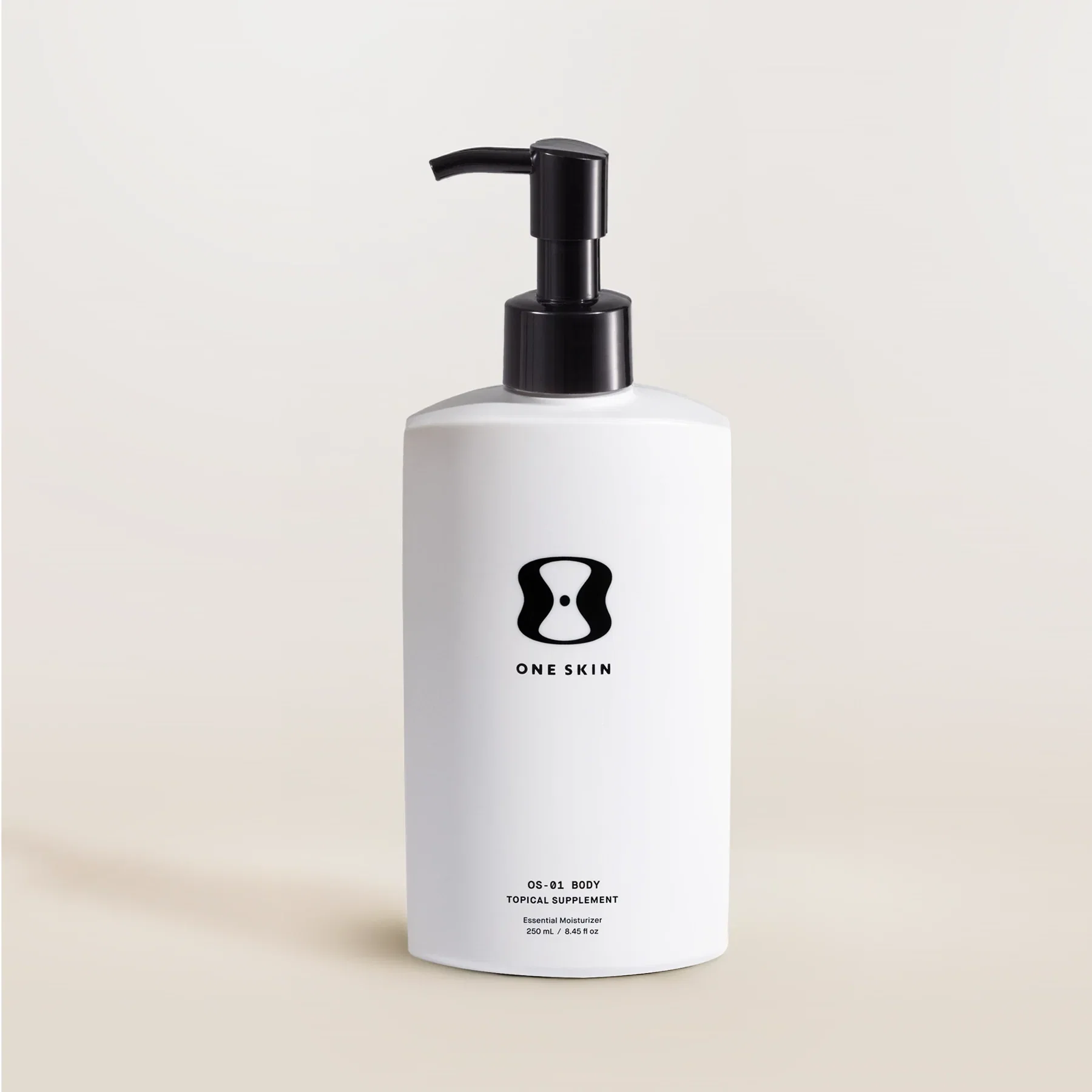
We’ve been friends since high school, and we’re both the same age, obviously. And we were talking about, like, the major difference in our skin and what things really work. And she said, “Have you tried OneSkin?” I’m like, “I’ve seen other podcasters talk about it, but I personally have never tried it.” So I ordered the OneSkin body lotion.

[00:37:44] Chalene Johnson :
It’s a lotion with a patented peptide that specifically targets aging cells, tackling, like, thin skin, crepey skin. It improves firmness. It keeps your skin hydrated and plump. This stuff is amazing. I ordered it immediately because if one of my friends who’s been through breast cancer, who’s struggling with the same hormonal menopausal situation with her skin, she says this stuff works, I’m like, “All right, let me try it.”

[00:38:13] Chalene Johnson :
This lotion is basically like a supplement that you can actually put on your skin. I highly recommend OneSkin’s 01 Body. It’s a lotion that has patented peptides that are specifically formulated to target aging cells, like, to tackle the thin skin. It improves firmness. It makes your skin plump and juicy.

[00:38:38] Chalene Johnson :
It holds in hydration. I love this lotion. In fact, my only complaint is that the largest bottle that they make is not big enough. I literally bathe in this stuff. She was so right. Anyways, I reached out to the company right away and I said, “I love this, but can you make a bigger bottle?” Like, I literally need to take a bath in this stuff, and apparently they’re working on it.

[00:39:02] Chalene Johnson :
But in the meantime, you get a nice little discount when you go to chalene.com/lotion. Again, it’s OneSkin. It is freaking amazing. Having super hydrated skin at my age is super important. It’s something I care very much about, and to find a product like this that actually works is remarkable. So if you haven’t yet tried OneSkin, go to chalene.com/lotion and try it for yourself.


00:39:34

DHEA: Over the Counter and About a Dollar a Day

[00:39:34] Chalene Johnson :
We are told, as midlife women, there’s so many things that we need. It’s like there’s a long list of supplements. There’s a long list of things we’re supposed to be doing. There’s a long list of hormones, et cetera, and it starts to get expensive. What are we looking at here? And I’m sure there’s a wide range, but what could a woman expect to spend if she’s doing regular topical treatments with DHEA?

[00:39:56] Dr Anna Cabeca:
A- around a dollar a day. That’s it. A dollar a day. That’s

[00:39:59] Chalene Johnson :
easy.

[00:39:59] Dr Anna Cabeca:
Mm-hmm.

[00:40:01] Chalene Johnson :
Does it help- Mm … men as well?

[00:40:02] Dr Anna Cabeca:
It really does. Oh. Men can use it as well, and they can use it, uh, in their private areas, and they will feel an improvement, yes.

[00:40:11] Chalene Johnson :
Remarkable. Okay. And you’re saying I- in the United States, I don’t have to ask my doctor for a prescription?

[00:40:18] Dr Anna Cabeca:
You don’t, and that’s the other thing. Like, many women using vaginal estrogen. Mm-hmm. Well, first of all, a lot of the regular prescriptions have endo- you know, toxic chemicals, preservatives, et cetera. If you look at what’s in some of the prescription estrogen vaginal-

[00:40:32] Chalene Johnson :
Really? …

[00:40:33] Dr Anna Cabeca:
solutions. Yeah. There’s parabens.

[00:40:35] Dr Anna Cabeca:
There’s preservatives. I mean, these are hormone disruptors. They actually will dry the tissue in the long run, so you’re, like, you have to keep using it, right? Of course. But if we use something clean, check the ingredients. But for instance, the DHEA, when you’re… The point is, when you’re using estrogen, you have to worry about it getting onto your male partner if you’re- Hm

[00:40:55] Dr Anna Cabeca:
sexually active. True. Because, you know, most men don’t need any more estrogen. Some maybe, but- Yeah … most men, typically, no. But with DHEA, the, it’s perfectly fine. He can use it himself. He c- you can have sex right after you apply it. You don’t have to worry about timing. So that’s an- another bonus to using DHEA.

[00:41:15] Dr Anna Cabeca:
In my experience, it works better than estrogen.


00:41:18

DHEA, Estrogen, and Breast Cancer

[00:41:18] Chalene Johnson :
Are there any known side effects? What does she need to be worried about?

[00:41:22] Dr Anna Cabeca:
Yeah. So a lot of the studies, and I’ve been following the studies since early 2000 by Dr. Ferdinand Labrie out of McGill University in Canada, who’s been, who studied DHEA vaginally for so many years, and the work of Dr.

[00:41:34] Dr Anna Cabeca:
Rebecca Glazer, who’s a breast surgeon, who used testosterone-

[00:41:38] Chalene Johnson :
Mm-hmm …

[00:41:38] Dr Anna Cabeca:
in, uh, in her patients with histories of breast cancers. And we worry about too high of a dose with testosterone. But with DHEA vaginally, we’ve seen no risk of endometrial issues- Mm … or bleeding or infection. We, it has been very safe. And the reason I started using it way back in 1999 with my patients is because of my breast cancer patients.

[00:42:02] Chalene Johnson :
Okay, let’s go there. It’s,

[00:42:04] Dr Anna Cabeca:
it was safe for my… Like, I had to figure out, how can I help these patients who’ve had a history of either ductal carcinoma in situ, DCIS for short, or breast cancer, and then were just left to dry up and experience all this, we, now we say genitourinary syndrome of menopause. Now I’m gonna get into all these medical terms.

[00:42:23] Dr Anna Cabeca:
Wait,

[00:42:23] Chalene Johnson :
so there’s a term for what we’re-

[00:42:25] Dr Anna Cabeca:
Yes …

[00:42:25] Chalene Johnson :
talking about today, and that term is?


00:42:28

GSM: The Three Letters to Bring to Your Doctor

[00:42:28] Dr Anna Cabeca:
GSM for short, but genitourinary syndrome of menopause.

[00:42:32] Chalene Johnson :
If she can’t pronounce that or remember it, if she just remembers GSM- Yeah … and goes to her doctor and says, “I’d like to talk to you about GSM”- Yes … then she doesn’t have to talk about her symptoms per se.

[00:42:45] Dr Anna Cabeca:
Right.

[00:42:45] Chalene Johnson :
It’s just three letters. Is that something you would recommend women start with when they talk- Absolutely … to their physician or clinician?

[00:42:52] Dr Anna Cabeca:
Yes, absolutely.

[00:42:53] Chalene Johnson :
I love it. So for the woman who is, she’s heard everyone saying estrogen is perfectly safe, you don’t need to worry about your risk of increasing breast cancer, but she still has this, like, gut instinct that she shouldn’t do an estrogen replacement of any form, or maybe she has had breast cancer and her oncologist has said stay clear from estrogen.

[00:43:15] Chalene Johnson :
What are the safety ramifications? Is this something that you would recommend to a woman who’s had a breast cancer diagnosis?

[00:43:21] Dr Anna Cabeca:
Yeah. I, I abs- that’s how I got started doing what I, I do. Because so many times w- women with a history of breast cancer are just left to suffer.

[00:43:32] Chalene Johnson :
Yeah.

[00:43:33] Dr Anna Cabeca:
And that’s unacceptable. So being able to use something like DHEA.

[00:43:38] Dr Anna Cabeca:
Vaginal estrogen, we’ve known since the early 2000s, vaginal estrogen’s very, very safe. And we go back and, you know, when I looked at the research in 2002 from the Women’s Health Initiative study, that was that big red flag, okay, you know, estrogen causes breast cancer. And I, I looked at all the original research.

[00:43:56] Dr Anna Cabeca:
I was a researcher before I went to medical school. Mm. So, and I had worked for the company that made Prempro. So- Oh, wow. I worked for Wyeth Ayers way back before medical school. So I was like, “Okay, wait. Let’s look at this research. What did they do?” And the estrogen-only arm didn’t increase breast cancer, and this is not an ideal form.

[00:44:14] Dr Anna Cabeca:
It’s oral estrogen. Oral estrogens increase inflammation, so that’s why it increased stroke and the cardiovascular events. Okay, so oral estrogen, we’re not gonna use that in our post-menopausal women per se, but we can use transdermal, vaginal, all these good ways, and estrogen’s not increasing your risk of breast cancer.

[00:44:30] Dr Anna Cabeca:
There’s no evidence of that. And then the Provera, the synthetic progestin, is a toxic form of progestin. It’s not bioidentical progesterone. That actually causes weight gain, edema, and breast cancer. But the research looking at the bioidentical form of progesterone did not increase breast cancer, and that study was published in, first study on that was published in 2005 by Dr.

[00:44:56] Dr Anna Cabeca:
Fournier out of France. And he looked at 88,000 women and three different forms of progest- well, they looked at progesterone and three different forms of progestins. Mm-hmm. And he found that progesterone had no increased risk. Oral micronized progesterone, zero increased risk of breast cancer, but the progestins did, with the worst being the medroxyprogesterone acetate, MPA for short, or Provera.

[00:45:22] Dr Anna Cabeca:
So we’ve known this since 2005. So, you know, I mean, that’s a huge study. That’s a lot of information

[00:45:30] Chalene Johnson :
But it takes, like, 20 years for these things to actually reach the general population. Yeah. Which is why I’m so grateful to have someone like you who’s educating us, and we can share episodes like this with our girlfriends.

[00:45:41] Chalene Johnson :
When I think about a woman who is, again, like, you know, struggling with so many of these things, and she also is looking at the cost of, a- and testing, et cetera, what is the one thing you would say to a woman, again, who’s like, “Man, I’m, maybe I’m not having that many symptoms.” Should she start with trying to find a clinician?

[00:46:02] Chalene Johnson :
Should she start with doing something over the counter?


00:46:05

Be the CEO of Your Own Body

[00:46:05] Dr Anna Cabeca:
We have to be the CEO of our body. We have been trained as women to give our power away, to your doctor, to your insurance company, to your partner- Yeah … to the medical system, to media, for heaven’s sakes. Yeah. No, we have to take the power back. We have to do it ourselves.

[00:46:21] Dr Anna Cabeca:
I say put your Nancy Drew hat on. Natalie Jill, our mutual friend, says, “Be your medical detective,” right? Yeah. You gotta look for yourself. There’s no one who’s going to be a better advocate for you than you, and maybe your mom. Mm. But that’s it. Yeah. Right?

[00:46:35] Chalene Johnson :
Yeah.

[00:46:35] Dr Anna Cabeca:
So we have to look, and we have so much at our disposal now.

[00:46:39] Chalene Johnson :
It’s crazy

[00:46:39] Dr Anna Cabeca:
Ordering our own lab test, right? Doing, getting our, choosing our supplements, choosing the thoughts we have on a daily basis is hu- huge and powerful. It can either be disease producing or healing, right? Yeah. Or, and that’s what we have to think about, but it’s 99% lifestyle and nutrition, and then the other, you know, one to 5%, you know, s- medications and supplements.

[00:47:04] Dr Anna Cabeca:
Yeah. So-

[00:47:05] Chalene Johnson :
I’m glad

[00:47:05] Dr Anna Cabeca:
you said that … it’s up to us, and we can test. And in my first book, The Hormone Fix, I write about the different tests, functional tests, et cetera. So we can advocate for ourselves. We can test. Yeah. So don’t- When you wait, but still, it also isn’t just in one doctor. Don’t expect one doctor to know everything, and I wish no other physician the journey I’ve been on to learn what I know.

[00:47:27] Dr Anna Cabeca:
Been to hell and back. So you need a health team. You need a health coach. You need a naturopath, a nutritionist, a, a functional medicine doctor, a primary care doctor. I mean, you need a healthcare team, to be honest.

[00:47:40] Chalene Johnson :
Yeah. It’s a lot, and it can feel overwhelming. Yeah. So if you were t- tell her to start with one thing as it relates to vaginal health- We talked about DHEA, using a cream.

[00:47:52] Chalene Johnson :
Yes. We talked about estrogen systemically. We talked about estrogen as a cream. We’ve talked about HRT in general. We’ve talked about doing a probiotic. Yeah. Again, if we’re just narrowing it down to vaginal health, what’s the, probably the number one thing you would say, “Okay, start here. Do this today.”

[00:48:12] Dr Anna Cabeca:
Yeah.

[00:48:13] Dr Anna Cabeca:
The health of the tissue first. Mm. And so that would be using the DHEA. It’s very close tied to reestablishing that good microbiome, vaginal microbiome- Okay … with a probiotic.

[00:48:24] Chalene Johnson :
And then we can layer things on.

[00:48:25] Dr Anna Cabeca:
Yeah.

[00:48:26] Chalene Johnson :
I can’t help but wonder, because I’ve used estrogen cream on my face-

[00:48:31] Dr Anna Cabeca:
Mm-hmm …

[00:48:31] Chalene Johnson :
and had great results, and if DHEA is stimulating collagen production, and it’s making the tissues thicker, is it appropriate to use it on your face?

[00:48:40] Dr Anna Cabeca:
Yeah. Yeah. Actually, the research on DHEA around the eyes to help with dry eyes is incredible- Wow … because it supports the glandular, your natural glandular health- Yeah … and secretions. Same thing it’s doing down there.

[00:48:54] Chalene Johnson :
It makes sense.

[00:48:54] Dr Anna Cabeca:
Yeah.

[00:48:55] Chalene Johnson :
Like, it’s tissue. I,

[00:48:56] Dr Anna Cabeca:
absolutely do it.


00:48:58

The Best Lubricants and the Toxic Ingredients to Avoid

[00:48:58] Chalene Johnson :
I love it. What about lubrication?

[00:49:01] Chalene Johnson :
So, so many women, obviously, if they start on this journey, they start using DHEA right away, they can’t expect that overnight, that’s going to solve the issue of, of dryness. Yeah. So what products do you recommend? Are there things that are safe? Are there things that she should be using in conjunction with this?

[00:49:19] Dr Anna Cabeca:
Yeah, so absolutely. So I’m, I’ve become a huge ingredient snob, because so many ingredients that are in our lubricants, for instance, can affects the vaginal microbiome, can cause infections, and all this stuff, right? Yeah. So we wanna be very conscientious. We wanna protect it. So things like aloe and hyaluronic, those two combined in a water-based lubricant is so key, uh, for play, and, uh, research has shown that 65, what was it?

[00:49:46] Dr Anna Cabeca:
Couples that use a lubricant have a significantly more frequent sex life, enjoyable sex life, and pleasure. That’s key.

[00:49:56] Chalene Johnson :
I mean, slippery when wet. Like, it just- That’s right … doesn’t even make sense. But I think women, we feel like I’m less womanly if I don’t have moisture, if you will. Right. So I think that that’s part of it, right?

[00:50:07] Chalene Johnson :
It’s like, if I’m asking for or I’m suggesting… In fact, I just had a conversation with a friend of mine whose husband told her it’s offensive to him- When she asks for lubrication because he’s like, “Why aren’t I turning you on?”

[00:50:24] Dr Anna Cabeca:
Ah, interesting.

[00:50:25] Chalene Johnson :
So how do we even start, like, in the bedroom having this conversation with our partner?

[00:50:28] Dr Anna Cabeca:
Yeah. Well, there’s the whole, I think understanding, okay, as hormones change, as the vaginal tissue changes, having lubrication in general increases pleasure. Mm-hmm. That is, like, 100%, it increases pleasure, it increases time, duration, et cetera. And women need longer pleasure, longer turn on. Like, foreplay, minimum 20 minutes.

[00:50:53] Dr Anna Cabeca:
I like the expression, go down a water slide when it isn’t wet, and then you will know why foreplay is so important, right? That’s a really important piece to educate and to, for men to understand that also as our lub- natural lubrication changes, having a lubricant makes us have more pleasure, and ultimately he wants our pleasure.

[00:51:14] Dr Anna Cabeca:
It’s not about our turn on or not, right? That, I think that’s really important to understand. Our bodies are different, and fine for two to five minutes maybe I have enough lubrication, but after that we need to keep the lubrication coming.

[00:51:29] Chalene Johnson :
Yeah. It has nothing to do with how turned on she is. It has nothing to do with how hot you are or not.

[00:51:36] Chalene Johnson :
It is a matter of biology, so- It’s biology … if nothing else, share it with your partner. Because we can’t expect them to understand our bodies. We weren’t even educated about our bodies. Right. It’s like a mystery. It’s like, “Let’s not talk about it. It’s too complicated.” So no wonder we have all these myths and misconceptions about- arousal- Right

[00:51:57] Chalene Johnson :
and intimacy.

[00:51:58] Dr Anna Cabeca: Right.

[00:51:58] Chalene Johnson :
So what about– ’cause I hear women saying like, “I, I want something without all the parabens. I want something that’s safe for me to use.” And I hear them talking about things like coconut oil and castor oil. Are those ideal? What, what are the ideal ingredients?

[00:52:11] Dr Anna Cabeca:
Okay, I always say, like, you know, coconut oil is a great lubricant once in a while.

[00:52:16] Dr Anna Cabeca:
Once in a while it’s okay, like, you know, because it, it lasts for a while, but it can disrupt the vaginal microbiome. Ah. So now we know that it’s not ideal. Once in a while, okay, but-

[00:52:27] Chalene Johnson :
You’re in a pinch.

[00:52:27] Dr Anna Cabeca:
Yeah, you’re in a pinch, and it, it does feel good. You can play with that and see other areas of your body.

[00:52:32] Dr Anna Cabeca:
Coconut oil feels so good, but it can also clog the glands.

[00:52:36] Chalene Johnson :
Ah.

[00:52:36] Dr Anna Cabeca:
And so what I’ve researched over time is water-based is key. It’s protective and, again, supportive for the microbiome. And adding aloe, uh, for a post-menopausal woman, because we wanna nourish the tissue, we wanna keep… ‘Cause you get micro-abrasions when you have sex, potentially, especially if the skin’s thin.

[00:52:54] Dr Anna Cabeca:
So adding in some aloe, it’s very soothing, and hyaluronan, hyaluronic acid. We’re using it on our face, everywhere on our body. Yeah. It’s really good for the vaginal tissue during, during intimacy as well. And then looking out for other ingredients in lubricants, and this has been such a big, a pet peeve for me, ’cause always looking at ingredients.

[00:53:15] Dr Anna Cabeca:
You’ll see things like aspartame- … in lubricant. I’m like, okay, first of all, it shouldn’t be in anything. It shouldn’t be allowed in this country, artificial sweetener, Sweet’N Low, right? Or whatever, aspartame. Yeah, yeah. So it’s in some lubricants, and, like, other preservatives and chemicals. Uh, petroleum jelly.

[00:53:32] Dr Anna Cabeca:
These are like to- propylene glycol. I mean, these are toxic to our body. Wow. These-

[00:53:38] Chalene Johnson :
Wow.

[00:53:38] Dr Anna Cabeca:
You know? So yeah, and the vagina, the reason hormones work so good in the vulvar vaginal area is because it’s so vascular. So it’s great, again, vaginal hormones are great to use ’cause it’s so vascular, it’s so well-absorbed.

[00:53:53] Dr Anna Cabeca:
And so are chemicals, so choosing what we’re using is important.

[00:53:58] Chalene Johnson :
Cleaning- What are some of the trends that you’re seeing right now that you’re like, “Listen, ladies, we know you’re being influenced by a lot of people right now, but this is a waste of time”?


00:54:06

Vaginal Steaming, Douching, and Going Commando

[00:54:06] Dr Anna Cabeca:
One of the things that comes up is vaginal steaming.

[00:54:09] Chalene Johnson :
Oh, okay.

[00:54:10] Dr Anna Cabeca:
One of the things that comes up is vaginal steaming. Now there’s like- I

[00:54:13] Chalene Johnson :
think the Kardashians popular- Yeah … so, so that’s pointless?

[00:54:16] Dr Anna Cabeca:
Well, I- if it makes you feel good and the herbs are clean, like ’cause usually with vaginal steaming they’ll use like traditionally in Asia they use certain blends of herbs that can be relaxing to the uterus, can be cleansing to the vagina, believe it or not- Mm-hmm

[00:54:32] Dr Anna Cabeca:
and it can feel really, really good. So if you’re taking the time to enjoy it, maybe that’s an oxytocin increasing moment. Yeah.

[00:54:38] Chalene Johnson :
Okay. But it’s not something our bodies need to do?

[00:54:41] Dr Anna Cabeca:
We don’t need to. Our body- Okay … our vagina is self-cleaning.

[00:54:46] Chalene Johnson :
Are there any other trends as it relates to vaginal health that you’re like, “Why are we even giving this the time of day?”

[00:54:51] Chalene Johnson :
Is there anyth- anything else that’s a waste of time or money?

[00:54:55] Dr Anna Cabeca:
I am trying to think of some things, like piercings are quite interesting- Mm … but maybe they can have some complications.

[00:55:03] Chalene Johnson :
Okay.

[00:55:03] Dr Anna Cabeca:
So not something I recommend.

[00:55:06] Chalene Johnson :
What about this debate I hear all the time about wearing underwear-

[00:55:10] Dr Anna Cabeca:
Oh, yeah … or

[00:55:11] Chalene Johnson :
not?

[00:55:11] Dr Anna Cabeca:
Yeah, yeah, that’s a really good point. Well, one thing, like on that note, cotton, organic, or going commando at night, y- you don’t need underwear.

[00:55:21] Chalene Johnson :
Oh.

[00:55:21] Dr Anna Cabeca:
Like let your vagina, vulvar area, let it breathe, right? Have some

[00:55:25] Chalene Johnson :
room.

[00:55:25] Dr Anna Cabeca:
Let have some room. Enjoy spreading out. Enjoy, spread.

[00:55:29] Chalene Johnson :
Make yourself at home.

[00:55:30] Dr Anna Cabeca:
Right. That’s okay.

[00:55:32] Dr Anna Cabeca:
Like you don’t have to be like suffocated- Tucked away all day … all the time. No, no. Another thing is, is douching.

[00:55:38] Chalene Johnson :
Oh,

[00:55:39] Dr Anna Cabeca:
yeah. Is doing… Like that, it disrupts the vaginal microbiome. We don’t need to douche. So that’s another-

[00:55:43] Chalene Johnson :
We don’t need to.

[00:55:44] Dr Anna Cabeca:
Yeah, no.

[00:55:45] Chalene Johnson :
Wow, okay. This is so helpful. We will put links to all of your best recommendations below in the show notes.


00:55:54

Where to Find Dr. Anna

[00:55:54] Chalene Johnson :
Where can people who want to learn more from you, tell us about your podcast, tell about where we can find more about you in social media as well?

[00:56:02] Dr Anna Cabeca:
Yeah. Thank you. So I’m easy to find, so dranna.com, so D-R A-N-N-A.com. My website, I have tons of information. I have a beautiful podcast called The Girlfriend Doctor Show, and I have three best-selling books that are available anywhere books are sold.

[00:56:17] Dr Anna Cabeca:
I, I’ll… I do recommend required reading, The Hormone Fix.

[00:56:20] Chalene Johnson :
Mm. Excellent. Well, thank you so much for sharing your wisdom and education and just caring so much for so many decades about us, about women, and continuing your mission. It’s so amazing to have you as one of our guest experts at Camp BMore as well.

[00:56:36] Chalene Johnson :
Thank you. You’re just a lovely, lovely, amazing human, and I’ve heard so many wonderful things about you, so when I met you, it’s all true.

[00:56:42] Dr Anna Cabeca:
Thank you.


connect with
Chalene
go beyond
The Podcast

The podcast is where the conversation starts. The after party continues inside our private community. Click the button below to join chalene on her private podcast:

TAKEAWAYS
    1. Hysterectomies and progesterone
    2. Over the counter DHEA cream
    3. Menopausal symptoms and solutions
REGISTRATION IS NOW OPEN!

Join The PodSquad on Facebook

We would love to hear from you!

Leave your questions or messages for Chalene

To advertise on our podcast,
please reach out to warren@chalenejohnson.com
and mention The Chalene Show

Join NEWSLETTER

Join my email list for free weekly tips and strategies on how to live your most productive, balanced and happy life!

© 2026 Chalene johnson all rights reserved.