
You walk every day… but is it enough?
Let’s be real. Both walking and rebounding lift your mood, get your heart pumping, and maybe even make you feel like a fitness goddess. But when it comes to burning fat? Only one of them has the research to back it up. Let's compare and break it down…
Rebounding: More Than Just a Trend
You’ve seen influencers rave about rebounders. “It detoxes! Builds muscle! Fixes your lymphatic system!” And you’re thinking… okay, but is this real, or just another gadget that ends up under my bed collecting dust?
Here’s the truth: 1–5 minutes of rebounding activates your lymphatic system, boosts circulation, and is low-impact on knees, ankles, and back.
It can strengthen muscles and bones, but don’t expect it to replace weightlifting if your goal is serious muscle gains. Most studies on rebounding also included strength training alongside it.
And the fun factor? Off the charts. From health bounces to marching, jogging, high knees, and even dancing, a rebounder can make cardio feel playful instead of painful.
Walking: Simple, Reliable, Science-Backed
Now let’s talk zone two walking. That’s walking long enough to get your heart rate up but low enough to chat comfortably, usually 30–60 minutes.
It’s easy, requires zero equipment, and you’ve been doing it your whole life. Walking improves cardiovascular health, supports fat burning, and gives you mental clarity — bonus if you’re brainstorming or recording a podcast like me.
Science loves walking. Rebounding? The research exists but is limited. Walking wins on consistency and accessibility.
The Real Weight Loss Mechanism
Here’s the truth bomb: weight loss is mostly about what you eat. Cardio is important, but over 40? Muscle is your secret weapon.
Walking doesn’t build muscle. Rebounding might slightly improve body composition, but real gains require resistance. Lift weights. Period. (Check out my fitness program Phase It, where I show you how to lift safely and effectively).
That said, if we’re comparing calories burned per minute, rebounding can be more intense. But most people don’t rebound for 60 minutes daily. Walking every day? That wins the long game.
Mix It Up for Maximum Results
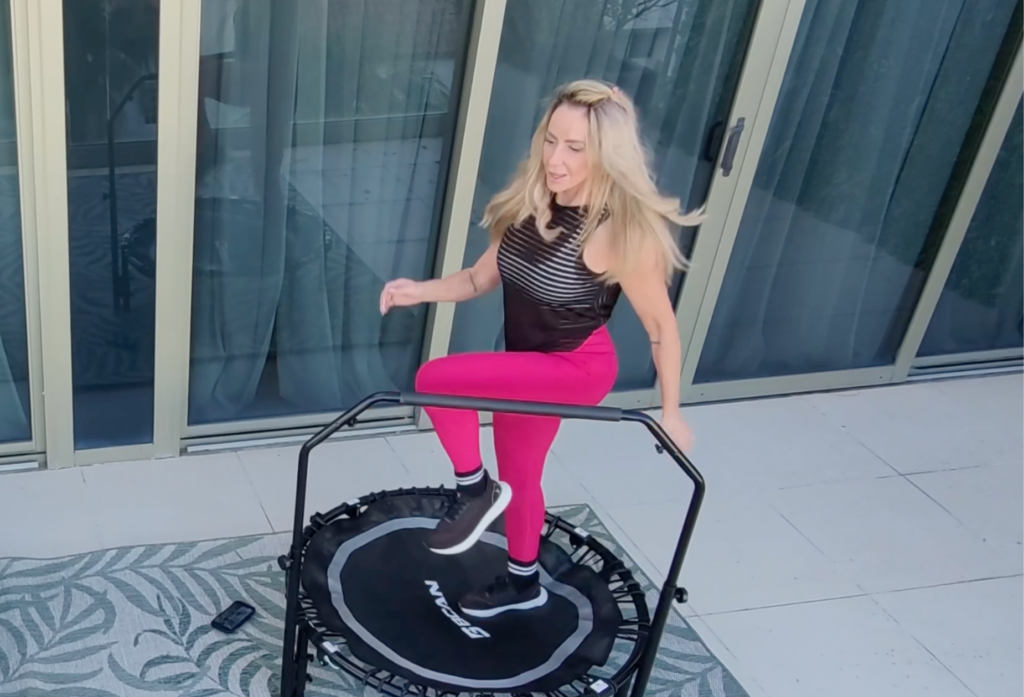
I walk daily. It's my mental and physical reset. Then I sprinkle in 10–20 minutes of rebounding to spice things up, raise my heart rate, and avoid plateaus.
Rebounding is low-impact, fun, and versatile. It complements walking and strength training perfectly.
Before You Buy a Rebounder, Ask Yourself…
- Where will it live? No space, no use.
- Is it the right investment? Does it match your goals: cardio or strength?
- Will I actually use it? Be honest.
- How much time does setup take? Convenience equals consistency.
- Am I solving a real problem, or buying hype? Don’t lie to yourself.
Answer these honestly… then decide.
Bottom Line
Walking is reliable, accessible, and science-backed. Rebounding is fun, versatile, and a great addition. Neither is magic for fat loss, but both can support your health when paired with strength training and smart eating.
Just move in a way that keeps you smiling, sweating a little (if ya like that kind of thing), and showing up for yourself.
Love you. Mean It.
Chalene
P.S. The rebounder shown in the video is this one. if you use my link I may earn a small commission. Now ya know.